



What's Happening?
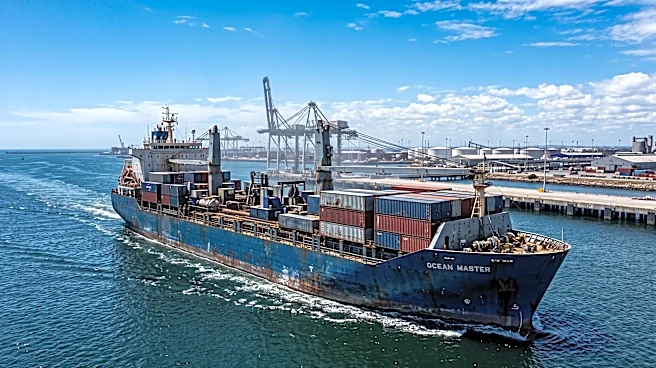
Brazil's oil exports to Europe have seen an unprecedented surge, largely driven by a tax break under Mercosur's interim trade agreement with the European Union. In August, EU-bound loadings reached 975,000 barrels per day (b/d), nearly double the 490,000
b/d recorded in February before the crisis. This increased the EU's share of Brazilian exports from 22% to approximately 34%. Brazil is now the fifth-largest crude supplier to the EU, behind the US, Norway, Kazakhstan, and Libya. The 12% crude export tax introduced by the Brazilian government, which is reduced by at least 50% for EU-bound shipments, has made Brazilian grades like Tupi and Búzios more competitive for European refiners, even after factoring in freight costs. This shift is also supported by Brazil's record-breaking crude output, which hit 4.7 million b/d in September, a 20.3% year-on-year increase.
Why It's Important?
This development significantly impacts global oil trade dynamics and energy security, particularly for Europe. The EU's ban on Russian crude imports in 2022 created a demand vacuum, which Brazil is now helping to fill. The preferential tax treatment makes Brazilian crude an attractive alternative, enhancing Europe's energy diversification efforts and reducing its reliance on traditional suppliers. For Brazil, this opens up a crucial new market for its rapidly expanding offshore production, ensuring outlets for its increasing output. The competitive pricing of Brazilian crude, even against North Sea benchmarks, highlights the effectiveness of trade agreements in reshaping commodity flows and providing economic advantages to participating nations. This also demonstrates how geopolitical events can accelerate shifts in global supply chains.
What's Next?
Brazil is expected to continue increasing its oil production, with two more Búzios platforms, P-80 and P-82, anticipated to start production in 2027. This will necessitate finding additional buyers in both Asia and Europe. The EU's continued preferential terms under the Mercosur agreement will likely sustain Europe's competitiveness as a destination for Brazilian crude. However, fluctuations in tanker rates and the evolving demand from Asian markets, particularly China and India, will influence the ultimate distribution of Brazil's growing oil exports. Brazilian producers will need to strategically balance sales to both continents to maximize returns, adapting to changing freight costs and market dynamics.
Beyond the Headlines
The Mercosur tax break's impact on Brazil's oil exports to Europe illustrates the intricate interplay between trade policy, energy security, and global market forces. This situation highlights how targeted economic incentives can rapidly reconfigure international trade routes and supplier relationships. Beyond the immediate economic benefits, this shift could foster deeper diplomatic and economic ties between Brazil and the EU, potentially leading to broader cooperation in other sectors. However, it also raises questions about the long-term sustainability of such tax breaks and their potential implications for other trading partners. The increased reliance on Brazilian crude also underscores the ongoing global challenge of transitioning to renewable energy sources while meeting current energy demands.