





What's Happening?
Payton Group has outlined its approach to prototyping planar magnetics, emphasizing the use of 'stack-up boards' to validate critical design elements before full production. Unlike wire-wound transformers, where prototypes often mirror production units,
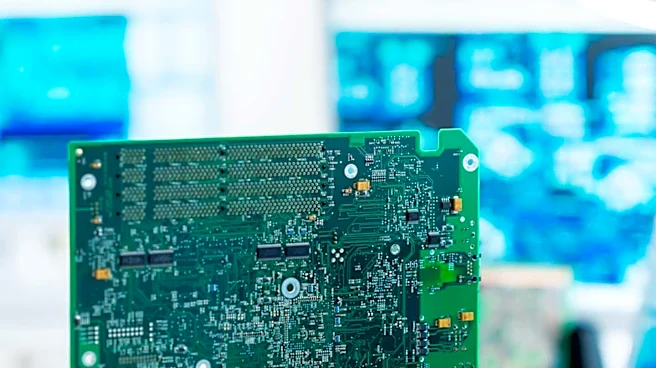
planar magnetics allow for separate prototyping of the PCB winding structure and the core. This method enables engineers to quickly test winding geometry, layer count, copper weight, and impedance using standard board house fabrication processes. The core can be validated in parallel using readily available ferrite shapes. This separation allows for early identification of potential issues such as thermal performance and creepage distances, reducing the risk of costly redesigns later in the development cycle. The company stresses that a stack-up board is not a shortcut but a strategic tool to independently validate the most complex parts of a planar design, ensuring a more predictable transition from design to a functional sample.
Why It's Important?
This prototyping methodology is significant for industries relying on advanced power electronics, such as telecommunications, automotive, and renewable energy, where planar transformers are increasingly used for their compact size and efficiency. By validating critical design aspects like winding structure and thermal behavior early, manufacturers can significantly reduce development time and costs associated with product iterations. Catching design flaws at the stack-up board stage, rather than after full assembly, prevents expensive rework and delays in product launches. This approach also allows for more precise control over performance characteristics, ensuring that the final product meets stringent electrical and thermal specifications. For companies like Payton Group, offering such specialized prototyping services enhances their value proposition by enabling clients to bring reliable and optimized power solutions to market faster.
What's Next?
The continued adoption of this prototyping approach by manufacturers could lead to faster innovation cycles in power electronics. As companies become more familiar with the benefits of stack-up boards and parallel core validation, it is likely that more complex and efficient planar magnetic designs will emerge. Payton Group encourages potential clients to engage with their engineering team to discuss custom SMPS transformer designs and prototyping approaches tailored to specific timelines. This suggests a future where collaborative design and rapid prototyping become standard practice, further integrating specialized engineering services into the product development pipeline. The emphasis on thorough documentation of each prototype iteration will also contribute to more robust production processes and easier troubleshooting for future product generations.
Beyond the Headlines
The detailed prototyping process for planar magnetics highlights a broader trend in advanced manufacturing: the increasing specialization and modularization of design validation. By breaking down complex components into independently testable units, companies can mitigate risks more effectively and accelerate product development. This approach also underscores the importance of precise engineering and material science in achieving optimal performance in compact electronic devices. The ability to validate specific aspects like thermal behavior and impedance before full assembly reflects a sophisticated understanding of potential failure points and a proactive strategy to address them. This methodology could influence prototyping strategies in other complex electronic components, promoting a more iterative and data-driven design process across various high-tech sectors.