



What's Happening?
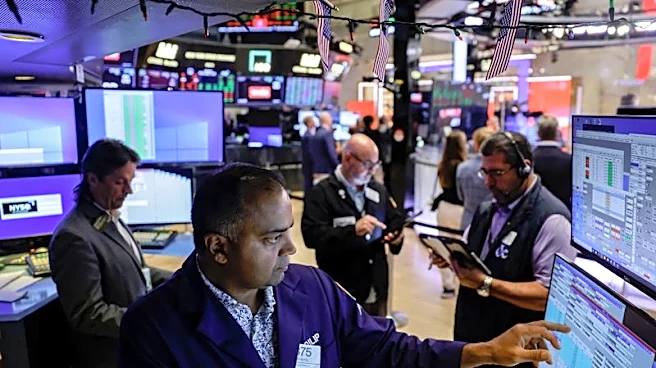
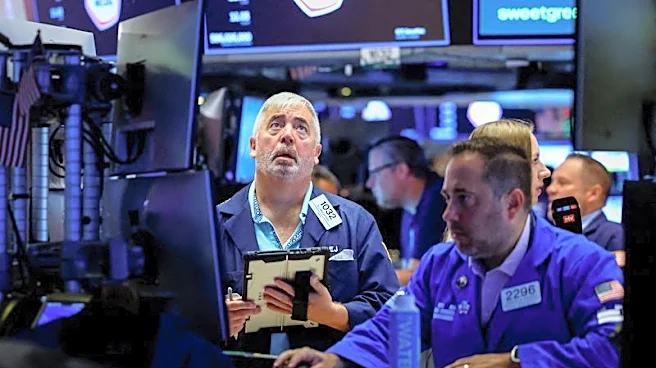
Shares of AI infrastructure companies Coherent, Ciena, and Teradyne experienced significant declines on Tuesday, leading the S&P 500's biggest decliners. Coherent fell 11%, Ciena was down 10%, and Teradyne also dropped 10%. This downturn is attributed
to a risk rotation among investors, moving away from semiconductor and AI hardware stocks. The iShares Semiconductor ETF decreased by approximately 5.4%, while the iShares Expanded Tech-Software ETF saw a slight increase of about 0.7%. This shift occurred as the 30-year Treasury bond reached a 19-year high, which tends to compress valuations for long-duration growth stocks. Sentiment was also impacted by Anthropic's disclosed $65 billion annualized revenue run rate, which was below market expectations, and reports of substantial off-balance-sheet AI commitments by major tech companies.
Why It's Important?
The significant decline in these AI hardware stocks signals a potential shift in investor sentiment and a re-evaluation of the AI sector's valuation. For the U.S. technology industry, this rotation indicates that while AI remains a powerful driver, the market is becoming more discerning about which segments and companies offer sustainable value. The rise in the 30-year Treasury bond yield directly impacts growth stock valuations, making future earnings less attractive in present terms. This could lead to a broader recalibration of expectations for companies heavily invested in AI hardware. For investors, this event highlights the inherent volatility and risk associated with high-growth sectors, particularly when valuations are stretched. It also suggests a potential preference for software-based AI solutions over hardware, or at least a more cautious approach to hardware investments, as the market seeks more tangible and immediate returns.
What's Next?
The immediate future will likely involve continued scrutiny of AI hardware companies' valuations and earnings reports. Investors will be looking for clearer indications of sustainable growth and profitability, especially given the 'risk rotation' observed. The performance of the 30-year Treasury bond will remain a critical factor, as its yield directly influences the attractiveness of growth stocks. Companies like Coherent, which supplies optical transceivers for AI data centers, will need to demonstrate strong operational performance and meet or exceed guidance to regain investor confidence. The market's reaction to future earnings disclosures and any updates on AI commitment figures will be crucial in determining whether this downturn is a temporary correction or the beginning of a more sustained re-pricing of AI hardware assets. Analysts' revised price targets and recommendations will also play a role in shaping investor behavior.
Beyond the Headlines
This market movement reflects a deeper narrative about the maturity and investment cycles within the AI industry. Initially, there was a broad-based enthusiasm for all things AI, leading to significant run-ups in hardware stocks. However, as the technology matures and the economic landscape shifts (e.g., rising interest rates), investors are moving towards more selective and potentially less speculative investments. This 'risk rotation' could lead to a more rational allocation of capital within the AI ecosystem, favoring companies with proven profitability and clearer paths to long-term value creation. It also underscores the interconnectedness of macroeconomic factors, such as bond yields, with specific sector performance. The long-term implication could be a more diversified and resilient AI industry, where innovation is balanced with financial prudence, and where the focus shifts from speculative growth to sustainable business models.