


What's Happening?
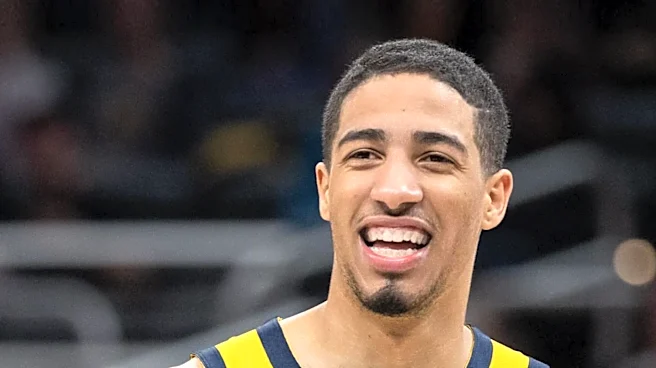
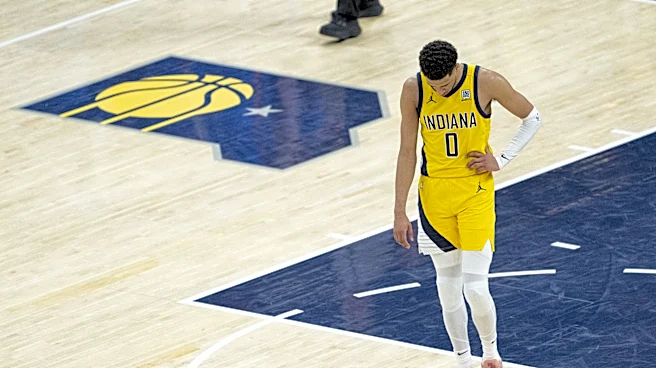
Indiana Pacers guard Tyrese Haliburton recently voiced his opinion on the growing influence of artificial intelligence (AI) in the NBA, specifically regarding its potential use by general managers for trade ideas. During an appearance on the 'Nothing
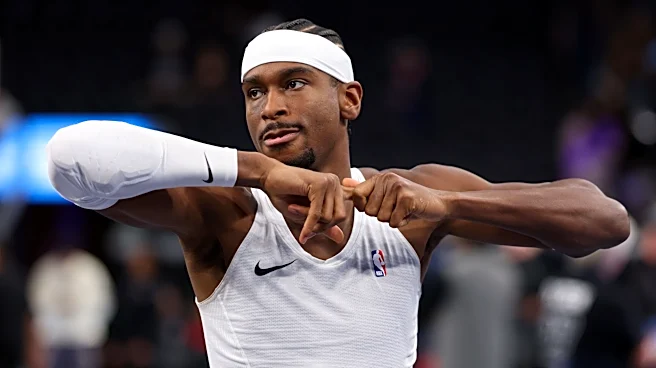
Silent' podcast, Haliburton stated that while the actual sport of basketball is 'AI-proof,' other aspects surrounding the game are likely being influenced by AI. He speculated that GMs might be using tools like ChatGPT to get quick answers for questions such as 'Who should we trade for?' or 'What deal would make sense money-wise?' Haliburton expressed concern about this trend, highlighting that AI 'doesn't know everything' and can often be incorrect, particularly when it comes to nuanced aspects of stats that it may not fully comprehend. This discussion comes as Haliburton is sidelined due to a hamstring injury, giving him time to reflect on broader league trends. The use of AI in sports has been a recent topic of discussion, with NBA Commissioner Adam Silver previously announcing plans to use AI for quicker out-of-bounds calls, and another player, Shai Gilgeous-Alexander, calling out a reporter for using a 'false stat' potentially generated by ChatGPT.
Why It's Important?
Haliburton's comments underscore a significant debate within professional sports regarding the integration of AI into decision-making processes. His concerns highlight the potential erosion of the 'human element' in sports management, where intuition, experience, and a deep understanding of player dynamics traditionally play crucial roles. If GMs are indeed relying on AI for trade suggestions, it could lead to less nuanced and potentially flawed roster decisions, impacting team chemistry and long-term success. The reliance on AI for quick answers might also devalue the roles of human analysts and scouts within organizations, who possess specialized knowledge that AI models may not fully replicate. This trend could also affect player perceptions of fairness and strategy, as decisions might be seen as driven by algorithms rather than human judgment. The broader implication is a shift in how strategic decisions are made in high-stakes environments, raising questions about accountability and the ultimate impact on the integrity and competitive balance of the league.
What's Next?
The discussion initiated by Haliburton is likely to fuel further conversations within the NBA and other professional sports leagues about the appropriate role and limitations of AI in management. While the NBA has already indicated plans to use AI for officiating, its application in strategic decisions like trades remains a contentious area. It is possible that teams and the league might establish clearer guidelines or ethical frameworks for AI usage in player personnel decisions. Players, coaches, and front-office staff may increasingly voice their perspectives on this technological shift, potentially leading to internal debates within organizations about balancing technological efficiency with human expertise. The ongoing development of AI will also necessitate continuous evaluation of its capabilities and potential biases, especially as it becomes more sophisticated. Future developments could include more transparent discussions from NBA leadership regarding AI implementation, or even formal policies to address concerns raised by players like Haliburton.
Beyond the Headlines
The deeper implications of AI's integration into sports management extend beyond mere trade decisions; they touch upon the very essence of human agency and expertise in complex fields. Haliburton's concern about AI 'not knowing everything' points to the limitations of current AI models, which often excel at pattern recognition but lack true understanding, empathy, or the ability to account for unpredictable human factors. This raises ethical questions about delegating critical decisions that affect careers and team dynamics to algorithms. The long-term shift could see a redefinition of the GM role, where human leaders become more focused on interpreting AI insights and integrating them with qualitative human intelligence, rather than solely relying on data-driven suggestions. Culturally, it could also alter how fans perceive the sport, potentially diminishing the narrative of human strategy and ingenuity if decisions are seen as algorithmically generated. This development mirrors broader societal debates about AI's role in various industries, highlighting the ongoing tension between technological advancement and the preservation of human judgment and values.