





What's Happening?
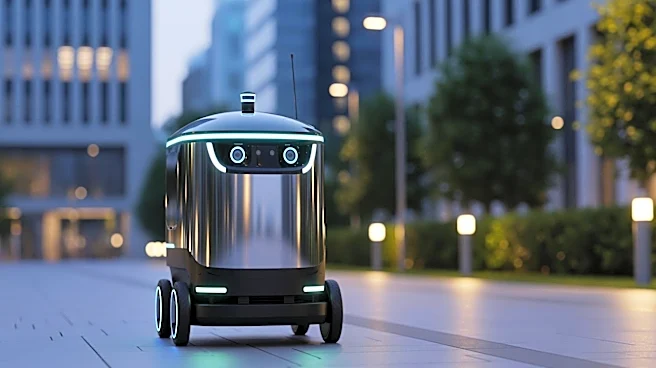
In Arlington, Virginia, self-driving delivery robots have started delivering Uber Eats orders, marking a significant step in autonomous delivery services. These robots, developed by the company Avride, began operating in the Rosslyn-Ballston corridor,
offering customers the choice between a robot or a human courier for their food deliveries. Operating from 10 a.m. to 10 p.m., these robots are designed to navigate sidewalks and crosswalks safely, using cameras and LiDAR technology. They can carry substantial loads, such as six large pizzas and multiple bottles, and are programmed to wait in apartment lobbies for customers to retrieve their orders. This initiative is part of a broader rollout by Avride, which already operates similar services in cities like Austin and Philadelphia. The robots are legally permitted under Virginia state law, provided they adhere to pedestrian laws and maintain liability insurance.
Why It's Important?
The introduction of self-driving delivery robots in Arlington represents a significant advancement in the field of autonomous technology and urban logistics. This development could potentially transform the delivery industry by reducing reliance on human couriers, thereby lowering operational costs and increasing efficiency. For consumers, it offers a novel and potentially faster delivery option. The initiative also highlights the growing trend of integrating technology into everyday services, which could lead to broader acceptance and implementation of autonomous systems in other sectors. Businesses like Uber Eats stand to benefit from reduced delivery times and costs, while consumers may enjoy more flexible and reliable service. However, this shift also raises questions about the future of jobs traditionally held by human couriers.
What's Next?
As the service expands, it will be crucial to monitor public reception and the operational efficiency of these robots. Potential challenges include navigating crowded urban environments and ensuring the safety of both pedestrians and the robots. Avride and Uber Eats may consider expanding the service to other regions if the Arlington rollout proves successful. Additionally, regulatory frameworks may need to evolve to address the unique challenges posed by autonomous delivery systems. Stakeholders, including local governments and businesses, will likely engage in discussions to optimize the integration of such technologies into urban settings.