






What's Happening?
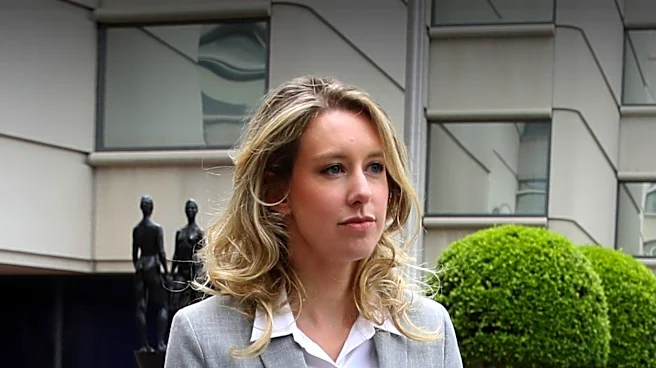
Elizabeth Holmes, founder of the blood-testing startup Theranos, is currently serving an 11-year prison sentence for defrauding investors. According to a 60 Minutes archive report, Holmes had claimed her company would revolutionize blood testing by performing
hundreds of laboratory tests from a single pin-prick of blood. However, as reported by Norah O'Donnell in 2018, the Theranos machine never delivered on its promised capabilities. The company's technology was found to be ineffective, leading to the downfall of the once-highly-touted startup and Holmes' subsequent conviction. The 60 Minutes archive highlights the significant gap between Theranos's ambitious claims and its actual technological performance, which ultimately resulted in the fraud charges.
Why It's Important?
The case of Elizabeth Holmes and Theranos is a significant cautionary tale for the U.S. startup and venture capital industries. It underscores the critical importance of due diligence and scientific validation in the tech and healthcare sectors, particularly when dealing with disruptive technologies. Investors stand to lose substantial capital when companies fail to deliver on their promises, as seen with Theranos, which at one point was valued at billions of dollars. This case also highlights the potential for regulatory scrutiny and legal consequences when companies misrepresent their capabilities, impacting public trust in innovative ventures. For the healthcare industry, it emphasizes the need for rigorous testing and transparency in medical technology development to ensure patient safety and accurate diagnoses, preventing the deployment of unproven or fraudulent solutions.
What's Next?
Elizabeth Holmes will continue to serve her 11-year prison sentence. The legal ramifications of the Theranos scandal may continue to influence how regulatory bodies, such as the FDA and SEC, approach oversight of emerging technologies and startups, particularly those in the health tech space. Investors are likely to exercise increased caution and demand more robust evidence of technological efficacy before committing capital to new ventures. The story of Theranos is also expected to remain a subject of public discourse and media coverage, serving as a case study in corporate fraud and the perils of unchecked ambition in the startup ecosystem. This ongoing narrative will likely shape future discussions around ethical innovation and accountability in the U.S. business landscape.
Beyond the Headlines
The Theranos saga extends beyond a simple case of corporate fraud, touching upon deeper ethical and cultural dimensions within Silicon Valley. It exposes a culture where hype and perceived potential can sometimes overshadow actual scientific achievement and rigorous validation. The narrative of a charismatic founder promising revolutionary change, despite a lack of tangible results, raises questions about the susceptibility of investors and the public to compelling storytelling over verifiable facts. This case also highlights the challenges faced by whistleblowers in exposing corporate malfeasance and the power dynamics at play within high-profile startups. The long-term shift could involve a more skeptical approach to 'disruptive' technologies, fostering a greater emphasis on scientific integrity and transparent reporting in the U.S. innovation landscape.