





What's Happening?
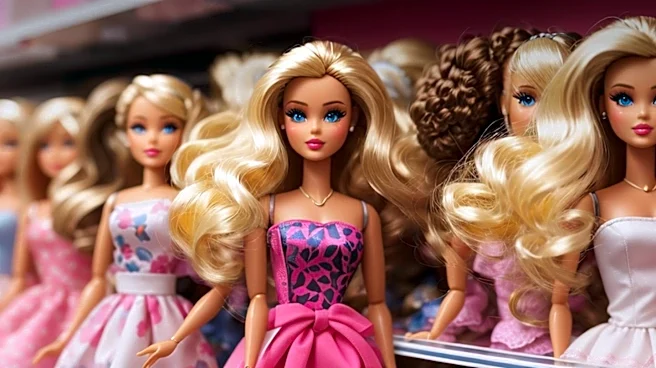
Mattel, Inc. is experiencing a decline in toy market share, primarily due to the underperformance of its Barbie brand, according to UBS. The financial firm has consequently reduced its price target for Mattel shares from $28 to $26, while maintaining
a 'buy' rating. UBS now projects a 1% decrease in Mattel's fourth-quarter net sales, a revision from its earlier forecast of 2% growth. Quarterly earnings per share have also been adjusted downwards to $0.36 from $0.45, excluding tariff refunds. Furthermore, UBS has lowered its 2027 earnings estimate for Mattel to $1.55 from $1.72. The company's full-year guidance indicates a potential fourth-quarter net sales fluctuation ranging from a 6% decline to a 3% increase. UBS's analysis, based on extrapolating shipment growth to retail, suggests a 5% to 7% decline in fourth-quarter retail sales, aligning with a low-single-digit drop for the full year. Despite overall retail sales growth in the third quarter, Barbie remains a significant weak point, disproportionately impacting margins as it is Mattel's highest-margin brand. This weakness persists even as third-party license revenue saw a 9% increase, excluding Mattel163.
Why It's Important?
The reported market share loss and the specific weakness of the Barbie brand are significant for Mattel and the broader toy industry. Barbie is a flagship product and a high-margin contributor for Mattel, meaning its underperformance directly impacts the company's profitability and overall financial health. The revised sales and earnings forecasts from UBS signal potential challenges for Mattel in meeting investor expectations and maintaining its competitive position. This situation highlights the dynamic nature of the toy market, where even established brands can face headwinds. For investors, the lowered price target and earnings estimates suggest a more cautious outlook on Mattel's near-term financial performance. The broader implication for the toy industry is that consumer preferences can shift rapidly, and even iconic brands require continuous innovation and strong market engagement to sustain growth. The contrast between Mattel's performance and the general acceleration observed in other parts of the toy industry (excluding trading card games and LEGO) indicates that Mattel may be struggling with specific brand-related issues rather than a sector-wide downturn.
What's Next?
Mattel will likely need to address the persistent weakness in its Barbie brand to regain market share and improve its financial outlook. This could involve strategic marketing campaigns, product innovation, or re-evaluating its brand positioning to better resonate with consumers. The company's performance in the upcoming fourth quarter will be crucial, as its full-year guidance allows for a wide range of outcomes. Investors will be closely watching Mattel's next earnings report for insights into the effectiveness of any corrective measures and the overall trajectory of its sales and profitability. UBS's continued 'buy' rating, despite the lowered price target, suggests that the firm still sees long-term value in Mattel's brand portfolio beyond toys, indicating potential for future growth through other revenue streams. However, the immediate focus will be on stabilizing and revitalizing its core toy business, particularly the Barbie line, to counter the current market share erosion.
Beyond the Headlines
The challenges faced by Mattel with its Barbie brand extend beyond mere sales figures, touching upon broader cultural and consumer trends. The enduring appeal of Barbie has historically been tied to evolving societal perceptions of femininity and play. A sustained weakness in the brand could indicate a shift in what consumers, particularly children and parents, seek in toys. This might involve a preference for different types of play, increased competition from digital entertainment, or a demand for toys that reflect a wider range of values and experiences. For Mattel, this necessitates a deeper understanding of contemporary consumer psychology and the ability to adapt its iconic brands to remain relevant. The company's strategy to earn more from its brands beyond toys, as noted by UBS, points to a broader industry trend where intellectual property is leveraged across various media and product categories. This diversification could be a key long-term strategy for Mattel to mitigate risks associated with fluctuations in the traditional toy market and to tap into new revenue streams.