






What's Happening?
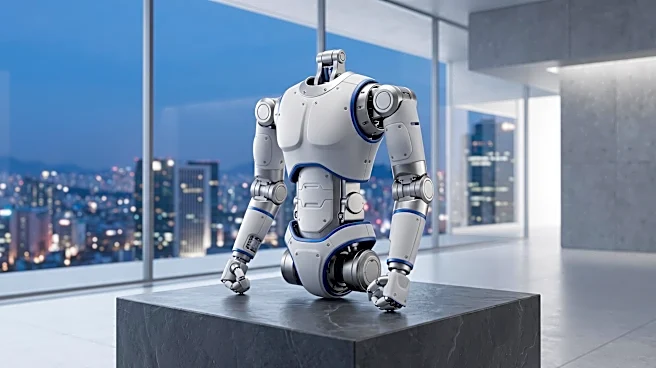
Unitree Robotics, a Hangzhou-based company specializing in humanoid robots, completed its listing in Shanghai in August. The company reported shipping 5,511 humanoids last year. Unitree Robotics is now supplying the hardware for a new venture by Galaxy
Corporation, a Seoul-based entertainment agency. Galaxy Corporation, known for managing artists like G-Dragon, plans to launch a robot girl group in January 2027, followed by a virtual AI girl group and then a human one. This initiative aims to capitalize on the entertainment market for humanoid robots, moving beyond the traditional research and education sectors that previously accounted for a significant portion (73.6%) of Unitree's humanoid revenue in the first nine months of 2025. The collaboration involves Unitree providing the robot bodies, while Galaxy's Korean team develops the software and choreography. This strategic partnership highlights a shift in the application of humanoid robotics towards consumer entertainment.
Why It's Important?
This development signifies a notable shift in the commercial application of humanoid robotics, moving from industrial and research settings into mainstream entertainment. For Unitree Robotics, this partnership with Galaxy Corporation could open new revenue streams and expand its market reach beyond its traditional customer base. The entertainment sector, particularly the K-pop industry, offers a vast global audience, potentially increasing demand for Unitree's robot hardware. For the broader robotics industry, this venture demonstrates a viable pathway for commercializing advanced robotics in consumer-facing roles, potentially accelerating innovation in robot design, performance, and cost-effectiveness. The success of a robot girl group could also influence investment trends in AI and robotics, encouraging more companies to explore similar entertainment-focused applications. This could lead to increased competition and further advancements in the capabilities of humanoid robots, making them more accessible and versatile for various industries.
What's Next?
Galaxy Corporation has scheduled a small robot K-pop concert in Macau for December, with subsequent shows planned for Dubai and Tokyo. This will serve as an initial test for the robot girl group concept and its audience reception. The official launch of the robot girl group is slated for January 2027. Following this, Galaxy plans to introduce a virtual AI girl group and then a human one, aiming to create a unified fandom across these different entertainment formats. The company is also working towards a U.S. listing and is establishing an American holding company, Galaxy Universe, indicating its ambitions for global expansion. The success of these initial ventures will likely determine the scale and speed of further investments in robot-based entertainment and could influence other entertainment agencies to explore similar technological integrations. The long-term viability will depend on audience engagement, technological advancements, and the ability to create compelling content that resonates with consumers.
Beyond the Headlines
This initiative raises several deeper implications beyond immediate entertainment value. Ethically, it prompts questions about the nature of performance and artistry when executed by machines. The concept of a robot idol group challenges traditional notions of celebrity, authenticity, and fan-artist relationships. Legally, it opens new frontiers in intellectual property law, particularly concerning choreography performed by machines and the ownership of a robot's 'persona' or 'face' if modeled after a human. Culturally, it reflects a growing integration of AI and robotics into daily life and entertainment, potentially reshaping societal perceptions of technology and its role in creative industries. The long-term shift could see a blurring of lines between human and artificial performers, leading to new forms of entertainment and fan engagement. This venture also highlights the increasing global collaboration in technology and entertainment, with Chinese hardware and Korean creative content converging to create a novel product for a global audience.