






What's Happening?
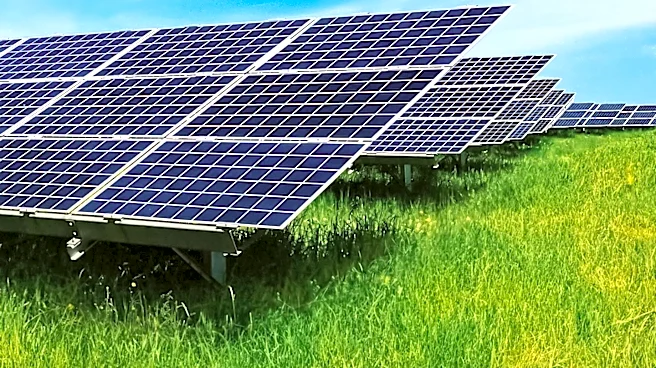
Panamint Capital has initiated construction on the Big Rooter Power project, a significant solar development at the Twin Oaks power station in Robertson County, Texas. This $1.7 billion project will add 1.2 gigawatts of solar capacity to the site, which
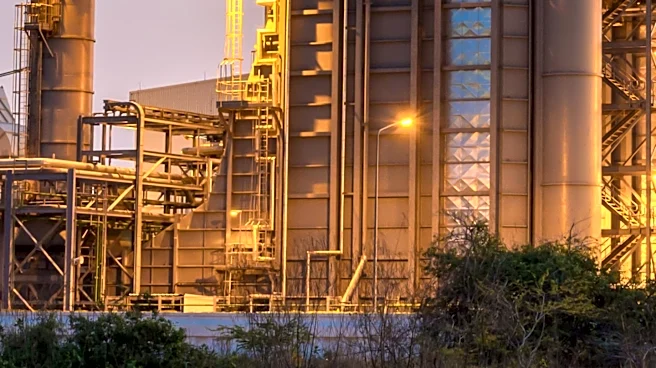
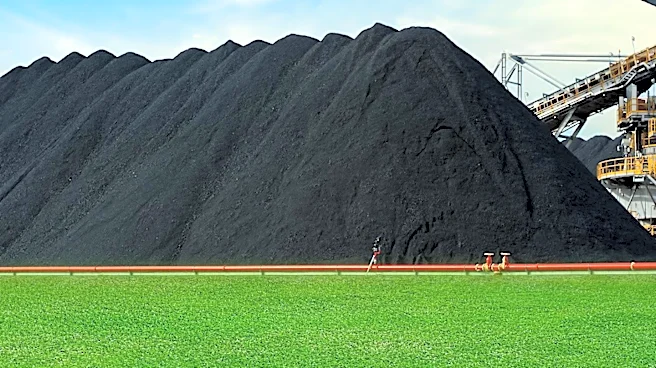
already hosts a 310-megawatt lignite-fired power plant. The project will be developed in two phases, with the first phase, Big Rooter West, expected to begin operations in August 2028, and the second phase, Big Rooter East, slated for completion in August 2029. The development will also include 1.6 gigawatt-hours of battery energy storage and infrastructure to support 790 megawatts of data center capacity. The project aims to enhance Texas's energy infrastructure without replacing existing coal generation.
Why It's Important?
The Big Rooter Power project represents a strategic move to diversify energy sources in Texas, a state experiencing rising electricity demand due to rapid data center expansion. By integrating solar power with existing coal operations, the project aims to ensure energy reliability and dominance. The use of 2 million U.S.-made solar panels and significant local steel underscores a commitment to domestic manufacturing and job creation. This hybrid energy hub could serve as a model for balancing renewable and traditional energy sources, potentially influencing future energy policies and infrastructure investments across the U.S.
What's Next?
As construction progresses, stakeholders will likely monitor the project's impact on local economies and energy markets. The long-term power purchase agreement with an undisclosed investment-grade offtaker suggests stable financial backing, which could attract further investment in similar projects. The project's success may prompt other states to consider hybrid energy solutions, particularly in regions with existing coal infrastructure. Additionally, the development could influence regulatory discussions on energy transition strategies, emphasizing the role of renewables in meeting growing energy demands.