






What's Happening?
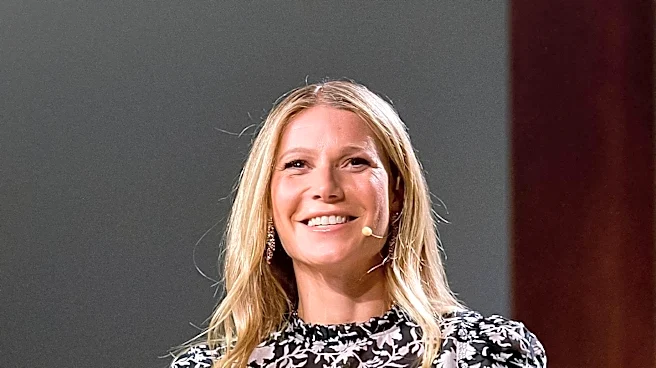
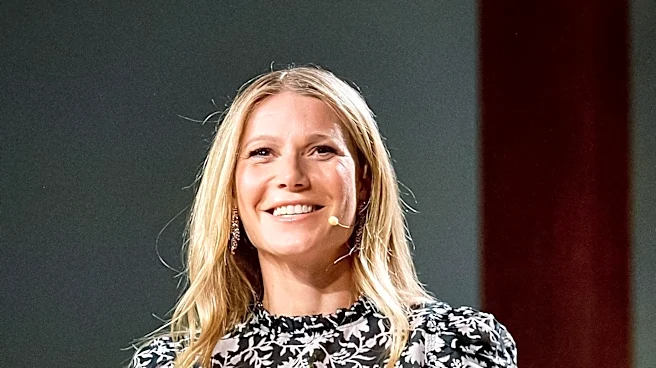
Gwyneth Paltrow, founder of Goop, and Moj Mahdara, co-founders of Kinship Ventures, recently discussed their investment philosophy and the current state of the wellness industry. Paltrow highlighted her early role in establishing the wellness category,
which was nascent 18 years ago when she started Goop and has since become a massive market. She emphasized her entrepreneurial spirit and the importance of trusting her instincts, noting that Goop continues to grow and serve as a platform for other founders. Mahdara explained that Kinship Ventures focuses on identifying 'TAM creators'—companies that define new total addressable markets. They seek founders who demonstrate resilience and an ability to function in adversity, viewing their role as business partners who build alongside the companies they invest in. The discussion also touched upon the increasing role of AI in healthcare and wellness, and the challenges and opportunities within the consumer product space.
Why It's Important?
This discussion is important for understanding the evolving landscape of the wellness industry and venture capital investment. The emphasis on 'TAM creators' by Kinship Ventures signals a strategic shift towards identifying and nurturing businesses that can carve out entirely new market segments, rather than competing in established ones. This approach could lead to significant innovation and disruption across various sectors, particularly in consumer goods, health tech, and AI-powered services. For consumers, the integration of AI into healthcare, as envisioned by Paltrow, promises more personalized and accessible health solutions, potentially democratizing access to advanced health insights. However, it also raises critical questions about data privacy and ownership, which Mahdara acknowledged as a trade-off for benefiting from internet-based services. The continued bullish outlook on the consumer market, despite the current focus on AI in venture capital, suggests that real-world problems and scalable consumer solutions remain attractive investment opportunities, provided they have a strong 'moat' and efficient teams.
What's Next?
Kinship Ventures will likely continue to seek out and invest in companies that are pioneering new market categories, particularly those leveraging AI to create personalized and accessible solutions in health and wellness. The co-founders anticipate a revolution in how consumers manage their health and well-being through AI tools, suggesting a future where genetic profiles, blood labs, and phenotype data are more readily integrated into personal health management. The ongoing debate around data privacy and ownership will also intensify as more personal data is utilized by these AI-powered platforms. Furthermore, the venture capital landscape may see a rebound in consumer-focused investments, especially for businesses with strong fundamentals and clear differentiation, as investors look beyond the current AI-centric funding trends. The focus on preventative care through technology is also expected to grow, addressing the current shortages in medical appointments and making healthcare more accessible before illness strikes.
Beyond the Headlines
The conversation delves into the deeper implications of the wellness boom, particularly the ethical and societal considerations surrounding data. Mahdara's perspective on data ownership—that consumers have largely consented to data monetization by using free internet platforms—highlights a significant shift in societal norms regarding privacy. This raises questions about the long-term impact on individual autonomy and the potential for data exploitation, even as AI promises unprecedented personalization in health. The concept of 'cognitive debt' and the search for efficiencies through 'agentic AIs' in daily life points to a broader cultural shift towards optimizing personal performance and reducing mental load. This could lead to new forms of dependency on technology and a redefinition of human-computer interaction. The founders' focus on 'instinct' and 'trusting oneself' in entrepreneurship also underscores a less tangible, yet crucial, aspect of innovation that goes beyond purely analytical decision-making, suggesting that intuition still plays a vital role in identifying future market trends.