





What's Happening?
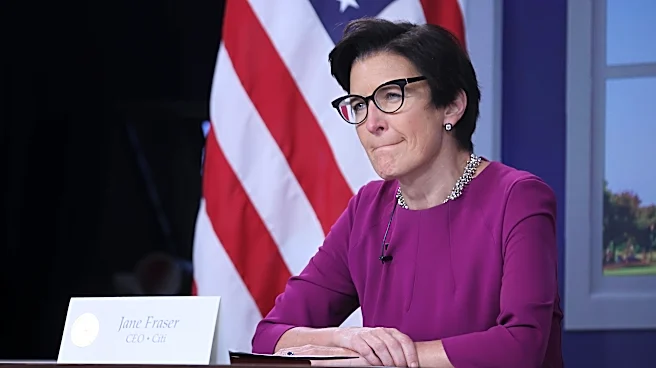
Citigroup Inc. Chief Executive Officer Jane Fraser has stated that the bank's recently acquired securities license in mainland China provides a significant competitive edge. Speaking to Bloomberg Television in Shanghai, Fraser emphasized that this license completes
Citigroup's product offering in the region. The approval for the securities business license was received last month, following a five-year waiting period. Despite the delays, which meant Citigroup obtained the license later than many of its rivals, Fraser believes the bank's existing global network and historical presence, combined with this new license, create a unique and strong position in the Chinese market. This development allows Citigroup to expand its operations and services within mainland China, enhancing its ability to compete with other financial institutions already established there.
Why It's Important?
This development is important for Citigroup as it signifies a major expansion of its capabilities in one of the world's largest and fastest-growing economies. Gaining a securities license in China allows Citigroup to offer a broader range of financial products and services, potentially attracting new clients and increasing its market share. For the U.S. financial industry, this move reflects the ongoing strategic importance of the Chinese market for global banks. It also highlights the challenges and opportunities associated with navigating regulatory environments in international markets. Citigroup's ability to leverage its global network with this new local license could set a precedent for how other international banks approach market entry and expansion in complex jurisdictions, potentially influencing future investment and operational strategies across the sector.
What's Next?
Following the acquisition of the securities license, Citigroup is expected to fully integrate its new capabilities into its existing operations in mainland China. This will likely involve expanding its local teams, developing new product offerings tailored to the Chinese market, and actively competing for business against both domestic and international rivals. The bank will focus on demonstrating how its global network and comprehensive services, now including securities, can benefit Chinese clients. Competitors will be closely observing Citigroup's strategy and market penetration, potentially adjusting their own approaches to maintain or gain market share. The success of Citigroup's expanded operations in China could also influence regulatory bodies and other international banks considering similar ventures, potentially leading to further liberalization or increased competition in the Chinese financial sector.
Beyond the Headlines
The significance of Citigroup's new China securities license extends beyond immediate business gains, touching upon broader geopolitical and economic themes. It underscores the persistent allure of the Chinese market for global financial institutions, despite ongoing geopolitical tensions and regulatory complexities. This move could be seen as a long-term strategic play, positioning Citigroup for future growth in a market that is increasingly influential on the global stage. It also highlights the delicate balance international banks must strike between adhering to local regulations and leveraging their global expertise. The success or challenges Citigroup faces in China could offer valuable insights into the evolving landscape of international finance, particularly concerning market access, regulatory hurdles, and the competitive dynamics between Western and Asian financial powerhouses. This also reflects a broader trend of financial globalization, where major players seek to establish footholds in key economic regions worldwide.