









What's Happening?
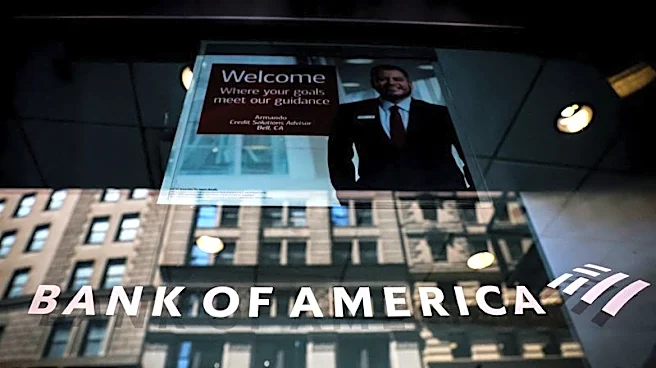
The U.S. Treasury Department has imposed a $1.2 billion fine on Bank of America for violating anti-money laundering (AML) and sanctions laws. This penalty marks the third-largest in the department's history. The Treasury Department stated that Bank of America failed
to report over $5 billion in suspicious activity to the government, including $1 billion linked to national security-related and other priority illicit finance risks. Treasury Secretary Scott Bessent emphasized that financial institutions are crucial in protecting economic and national security, and failures by large banks expose the entire U.S. financial system to illicit finance risks. The Office of the Comptroller of the Currency (OCC) also levied a $750 million civil penalty against the bank, citing failures to address shortcomings in its AML programs identified in a 2024 cease-and-desist order. Bank of America admitted to willfully violating the 1970 Bank Secrecy Act, which mandates banks to assist the government in detecting and preventing money laundering. Additionally, Bank of America reached an $11.6 million settlement with the Office of Foreign Assets Control (OFAC) for apparent violations of numerous sanctions programs, including those related to Iran, Russia, narcotics, and global terrorism.
Why It's Important?
This significant fine underscores the U.S. government's intensified focus on enforcing anti-money laundering and sanctions compliance within the financial sector. The penalty against Bank of America, one of the nation's largest banks, highlights that no institution is exempt from these regulations, regardless of its size. The Treasury Department's action sends a clear message to financial institutions about the severe consequences of prioritizing revenue over robust compliance programs. Failures in AML and sanctions compliance can have far-reaching implications, potentially enabling illicit finance activities that threaten national security, such as funding terrorism, drug trafficking, and child sex abuse. The case also reveals the critical role of internal controls and proactive reporting by banks, rather than over-reliance on external inquiries. For the U.S. financial system, this enforcement action aims to strengthen its integrity and resilience against illicit financial flows, protecting it from being exploited by criminal networks and hostile state actors. The financial industry will likely face increased scrutiny and pressure to enhance their compliance frameworks to avoid similar penalties.
What's Next?
As a result of the fine, Bank of America will incur a non-tax-deductible charge of $1.2 billion, which is expected to reduce its quarterly net income by approximately 17 cents per share. The bank has stated its commitment to completing the work required to address the issues raised by regulators, having already invested billions in technology and dedicated thousands of employees to combat financial crime. Bank of America will also be required to work with a third party to report any previously undetected transactions to the Financial Crimes Enforcement Network (FinCEN). Furthermore, the bank will need to have various security programs reviewed, with a specific focus on addressing risks related to the Southwest border, Iran, and Russia. This action follows other recent large penalties, including a $350 million fine against American Express for similar AML shortcomings, indicating a continuing trend of stringent enforcement by U.S. regulatory bodies. Financial institutions across the U.S. can anticipate ongoing pressure to bolster their compliance measures and reporting mechanisms.
Beyond the Headlines
The Treasury Department's enforcement action against Bank of America reflects a broader strategic effort by the U.S. government to combat illicit finance, which has become increasingly complex with the rise of new technologies and globalized financial networks. The mention of 'Chinese Money Laundering Networks' and 'illicit finance along the southwest border' points to specific national security concerns that are driving these regulatory crackdowns. This case highlights the ethical imperative for financial institutions to not only comply with the letter of the law but also to actively uphold the spirit of anti-money laundering regulations to protect society from serious crimes. The substantial penalties serve as a deterrent, pushing banks to invest more heavily in advanced compliance technologies and personnel. This could lead to a significant shift in how financial institutions approach risk management and regulatory compliance, potentially fostering a more proactive and integrated approach to identifying and reporting suspicious activities. The long-term impact could be a more secure and transparent global financial system, albeit with increased operational costs for banks.