
What's Happening?
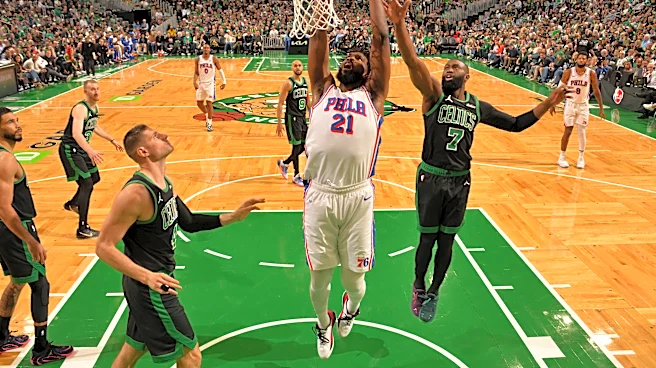
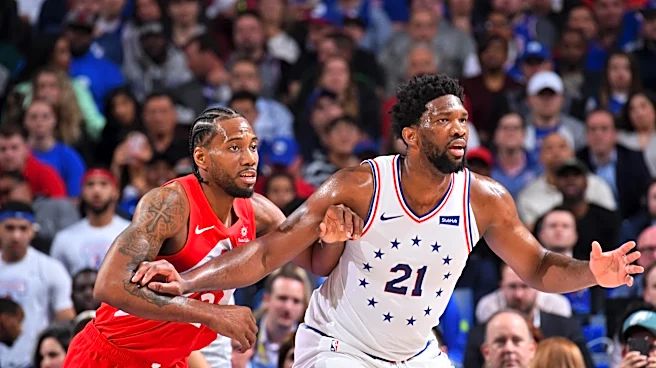
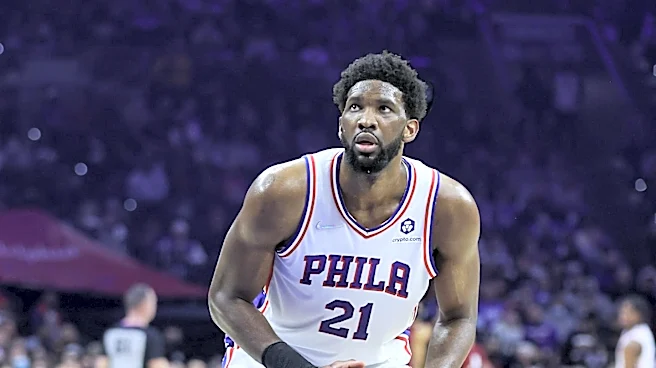
Joel Embiid is anticipated to stay with the Philadelphia 76ers, according to ESPN analyst Brian Windhorst, despite recent speculation following the team's playoff elimination. The 76ers were swept in the second
round by the New York Knicks, which led to renewed questions about Embiid's future with the franchise. Windhorst cited Embiid's substantial contract, which has three years and $192 million remaining, as a primary reason for his expected return. Additionally, Philadelphia's current salary structure, with Embiid and Paul George tied to significant long-term deals, makes major roster overhauls challenging. Embiid played through multiple injuries during the postseason, including a hip issue, a sprained ankle, and an appendectomy, yet still averaged 24 points, 7.3 rebounds, and 5.4 assists. Windhorst emphasized that Embiid is 'not going anywhere,' indicating stability for the team's star player.
Why It's Important?
The decision regarding Joel Embiid's future is crucial for the Philadelphia 76ers' competitive outlook and the broader NBA landscape. Embiid is a former MVP and a cornerstone of the franchise; his departure would necessitate a complete rebuild, while his retention signals a continued push for championship contention. For the 76ers, keeping Embiid means maintaining a superstar talent around whom they can build, despite repeated playoff disappointments. His large contract, while ensuring his presence, also limits the team's financial flexibility for acquiring other high-caliber players, potentially forcing them to rely on trades or mid-level exceptions. This situation impacts the team's ability to compete against other top Eastern Conference contenders, as roster construction becomes a delicate balance of retaining stars and finding complementary pieces within salary cap constraints. The stability of Embiid's position also influences fan engagement and the team's market value.
What's Next?
With Joel Embiid expected to remain, the Philadelphia 76ers will likely focus on optimizing their roster around him and Paul George. The team has a few free agents, including Kelly Oubre and Quentin Grimes, whose situations will need to be addressed. Given the significant salaries committed to Embiid and George, the 76ers' front office will face the challenge of making impactful roster improvements with limited cap space. This could involve exploring trade opportunities for players on smaller contracts or utilizing draft picks to acquire young talent. The team will also need to manage Embiid's health, as he has consistently battled injuries during playoff runs. The upcoming offseason will be critical for the 76ers to assess their current roster, identify areas for improvement, and strategize how to build a more resilient and successful team capable of advancing further in the playoffs.
Beyond the Headlines
The ongoing situation with Joel Embiid and the Philadelphia 76ers highlights broader trends in professional sports regarding player contracts, team loyalty, and the pressure to win championships. Embiid's substantial contract, while securing his tenure, also illustrates the financial commitments teams make to superstar players, which can both stabilize and constrain a franchise. The repeated playoff exits, despite individual brilliance, raise questions about team construction and the effectiveness of 'superteam' models. This scenario also touches on the mental and physical toll on athletes who consistently play through injuries in pursuit of a title, and the organizational responsibility to manage player welfare. The narrative around Embiid's future reflects the intense scrutiny and high expectations placed on star players in the NBA, where individual performance is often weighed against team success, and the long-term implications of contract decisions shape a team's destiny for years.