



What's Happening?
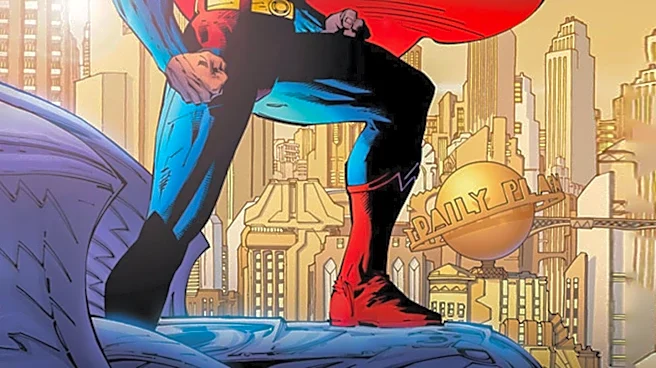
Superman: The Stranger #2, set in an Art Deco-inspired 1938 Metropolis, reimagines Superman's early adventures through a modern storytelling lens. The issue, by Wes Craig, emphasizes the core elements of a great Superman story, particularly the importance
of Lois Lane. Lois is depicted as a tenacious reporter whose pursuit of truth and exposure of corruption in Metropolis directly motivates Clark Kent's actions as Superman. The comic showcases Superman's early methods, such as intimidating a corrupt land developer by physically lifting him to the top of a building. Jason Wordie's vibrant coloring plays a significant role, using warm yellows for daytime scenes in the Daily Planet, blues and blacks for night, and bright green for Clark's dreams, hinting at his alien nature. While the issue is praised for its strong portrayal of Lois and its Golden Age energy, some parts involving Lex Luthor are noted for re-treading elements from the first issue.
Why It's Important?
This issue is important for its fresh take on Superman's origins, demonstrating how classic elements can be reinterpreted for contemporary audiences while retaining their core appeal. By highlighting Lois Lane's crucial role, it reinforces her significance not just as a romantic interest but as an independent, driving force in Superman's early career, reflecting modern sensibilities about strong female characters. The Art Deco setting provides a unique aesthetic and historical context, allowing for exploration of societal issues relevant to that era, which can resonate with current concerns about corruption and power. For the comic book industry, such re-imaginings can attract new readers while satisfying long-time fans, proving the enduring versatility of iconic characters. It also underscores the impact of artistic choices, like coloring and setting, in shaping the overall tone and message of a story.
What's Next?
As Superman: The Stranger #2 continues to develop its narrative, future issues will likely delve deeper into the mysteries hinted at by Clark's green dreams and the evolving dynamic between Superman, Lois Lane, and the Luthor family. The series is expected to further explore the Art Deco Metropolis and the societal challenges of 1938, potentially drawing parallels to modern issues. The creators will likely address the criticism regarding Lex Luthor's repetitive portrayal, aiming to advance his plotline and bring him into more direct conflict with Superman. The series' commitment to core Superman concepts, combined with its willingness to take 'wild swings,' suggests that upcoming installments will continue to offer both familiar and surprising elements, aiming to solidify its place as a significant Black Label title.
Beyond the Headlines
Beyond its narrative and artistic merits, Superman: The Stranger #2 explores the foundational myth of Superman as a champion of the common person against systemic injustice. By setting the story in 1938, it taps into the historical context of Superman's creation, where his early foes were often corrupt officials and exploitative figures, rather than supervillains. This emphasizes the character's role as a social crusader, using his powers to address real-world problems. The issue also subtly touches on themes of identity and alienation through Clark's green dreams, hinting at his struggle to reconcile his alien heritage with his human life. The portrayal of Lois Lane as a fearless journalist underscores the importance of truth and investigative reporting in holding power accountable, a theme that remains highly relevant in contemporary society.