










What's Happening?
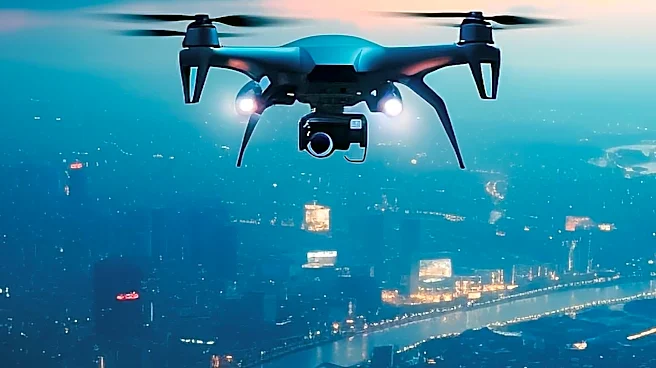
Drone deliveries are becoming increasingly common in the United States, with major companies like Walmart and Little Caesars beginning to implement this technology. The Federal Aviation Administration (FAA) requires drones to obtain a Part 135 Air Carrier
and Operation Certification to deliver goods for compensation. Beth Flippo, CEO of Dexa, highlighted that drone deliveries could potentially exceed 800 million by 2034. The technology is particularly beneficial in urban areas, addressing traffic issues and providing rapid delivery services. However, current limitations include the need for a one-to-many operator-to-aircraft ratio, which is expected to evolve into a system similar to air traffic control, allowing one person to monitor multiple drones.
Why It's Important?
The expansion of drone deliveries represents a significant shift in logistics and urban planning. By reducing traffic congestion and providing faster delivery times, drones could revolutionize how goods are transported in cities. This development could lead to increased efficiency for businesses and convenience for consumers. The potential for drones to handle a large volume of deliveries also suggests a future where traditional delivery methods may be supplemented or even replaced, impacting industries such as retail, food service, and logistics. Companies investing in drone technology may gain a competitive edge, while regulatory bodies like the FAA play a crucial role in ensuring safety and compliance.
What's Next?
As drone technology continues to advance, the industry anticipates a shift towards more efficient monitoring systems, akin to air traffic control. This would allow for greater scalability and operational efficiency. Companies are likely to expand their drone delivery networks, and more businesses may enter the market, increasing competition. Regulatory developments will be crucial, as the FAA and other authorities work to establish guidelines that balance innovation with safety. Public acceptance and adaptation to drone deliveries will also play a role in shaping the future landscape of urban logistics.