




What's Happening?
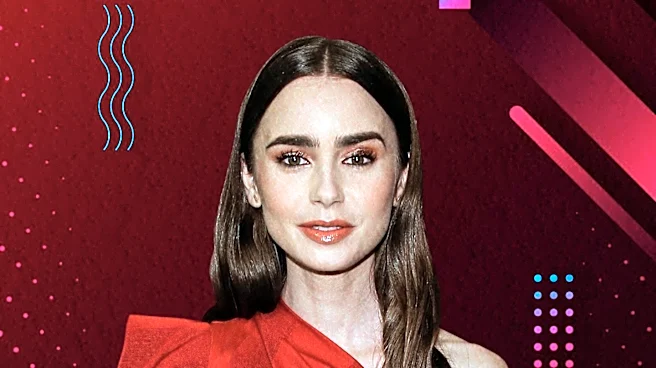
Lily Collins, known for her role in 'Emily in Paris,' is identified as a 'nepo baby' due to her lineage as the daughter of Oscar-winning British pop legend Phil Collins. Her husband, filmmaker and director Charlie McDowell, also comes from a prominent
entertainment family; he is the son of British actor Malcolm MacDowell and 'Back to the Future' star Mary Steenburgen. The term 'nepo baby,' short for nepotism baby, has gained traction in recent years to describe individuals whose parents or relatives are well-known figures, particularly in the entertainment industry. This highlights a broader discussion about the advantages and opportunities afforded to those with famous family connections in Hollywood and beyond. The article notes that while the concept of celebrity offspring entering the same field is not new, the discourse surrounding their fame and deservedness has intensified.
Why It's Important?
The discussion around 'nepo babies' like Lily Collins and Charlie McDowell is important as it sheds light on the dynamics of privilege and access within the U.S. entertainment industry. It raises questions about meritocracy versus inherited advantage, and how family connections can significantly influence career paths and opportunities. For aspiring artists and professionals without such ties, this phenomenon can underscore perceived inequalities in a highly competitive field. For the industry itself, it prompts reflection on diversity, inclusion, and the mechanisms through which talent is discovered and nurtured. The public's engagement with this topic also reflects a growing awareness and critique of systemic advantages, potentially influencing how audiences perceive and support celebrity figures and their projects.
What's Next?
The ongoing conversation about 'nepo babies' is likely to continue shaping public perception and industry practices. As more individuals with famous parents enter the entertainment world, there may be increased scrutiny of their achievements and the opportunities they receive. This could lead to further discussions within the industry about equitable access and the need for greater transparency in talent acquisition. For figures like Lily Collins, continued success may be met with both admiration for their work and ongoing commentary regarding their family background. The trend could also encourage more open dialogue from celebrities themselves about the role their lineage has played in their careers, potentially leading to a more nuanced understanding of the issue.
Beyond the Headlines
Beyond the immediate discussion of individual careers, the 'nepo baby' phenomenon touches on deeper societal implications regarding class, privilege, and the concentration of power. It highlights how advantages can be passed down through generations, not just financially, but also through social capital, connections, and early exposure to specific industries. This extends beyond entertainment to other fields where family legacy can play a significant role. Ethically, it prompts questions about fairness and the ideal of equal opportunity. Culturally, it reflects a societal fascination with celebrity and lineage, while also fueling a critical examination of the structures that perpetuate such advantages. The long-term shift could involve a greater demand for accountability and a re-evaluation of how success is defined and achieved in various sectors.