




What's Happening?
Depeche Mode's 1983 single, 'Get the Balance Right!', released shortly after Alan Wilder joined the band and Vince Clarke departed, represented a significant transition in their musical direction. Composed by Martin Gore, the track was the first single from
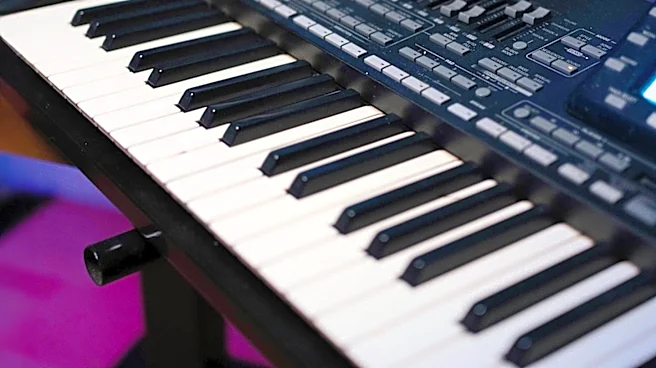
the new lineup and was quickly released in January 1983. While it became a fan favorite and has been included in numerous compilation albums, members of the band, including Martin Gore and Dave Gahan, expressed strong dislike for the song. Gore stated, "I hate it, and I wrote it. This was the only time we HAD to turn out a single whether we wanted to or not." Gahan echoed this sentiment, calling it his "least favourite track." Sonically, the single bridged the gap between the analog sound of their debut album, 'Speak and Spell', and the sampler-driven, digital output that characterized their subsequent albums. The song features minimal electronic percussion from a Roland TR-808, synth lines from an ARP 2600 and a Synclavier, and an unusual processed guitar part. Its structure relies on strong hooks and phrases with minimal chordal content, making its harmonic landscape complex to define.
Why It's Important?
This period was crucial for Depeche Mode as it solidified their new lineup and marked a definitive shift in their creative process and sound. The departure of Vince Clarke, the band's main songwriter, elevated Martin Gore's role and brought in Alan Wilder, a classically trained musician, whose contributions were instrumental in shaping their future sound. 'Get the Balance Right!' demonstrated the band's willingness to experiment with more sophisticated electronic instrumentation and production techniques, moving towards the sampler-driven sound that would define their later, more critically acclaimed work. Despite the band's personal disdain for the track, its commercial success and fan reception indicated that their evolving sound resonated with audiences. This internal conflict between artistic vision and commercial necessity highlights the pressures faced by bands in the music industry, particularly during periods of transition. The song's innovative use of synthesizers and its unique sonic texture laid the groundwork for Depeche Mode's reputation as pioneers in electronic music.
What's Next?
Following 'Get the Balance Right!', Depeche Mode continued to explore and refine their sampler-driven and digital sound, which became a hallmark of their subsequent albums. The experience of creating this single, despite the band's reservations, likely influenced their approach to future songwriting and production, pushing them towards more experimental and complex arrangements. The band's embrace of 12-inch club mixes, as noted by Alan Wilder, suggests a strategic move to cater to a broader audience and expand their influence within the electronic music scene. This foundational shift allowed them to evolve beyond their initial synth-pop image and establish themselves as a more serious and innovative musical force. The band's continued success and critical acclaim in the years that followed demonstrate that this transitional period, however contentious internally, was ultimately beneficial for their long-term artistic development and commercial viability.
Beyond the Headlines
The story of 'Get the Balance Right!' offers a deeper insight into the creative tensions and evolutionary processes within successful musical groups. It underscores the often-unseen struggle between a band's artistic integrity and the commercial demands of the music industry. The fact that a song disliked by its creators could become a fan favorite and a pivotal moment in the band's sonic evolution highlights the subjective nature of art and the unpredictable trajectory of creative output. This episode also illustrates the impact of personnel changes on a band's identity and direction, with Alan Wilder's arrival and Martin Gore's increased songwriting role fundamentally altering Depeche Mode's trajectory. The song's innovative use of technology, particularly the Synclavier, also points to the broader technological advancements in music production during the early 1980s and how artists adapted these tools to forge new sounds and genres, ultimately influencing the landscape of electronic music for decades to come.