







What's Happening?
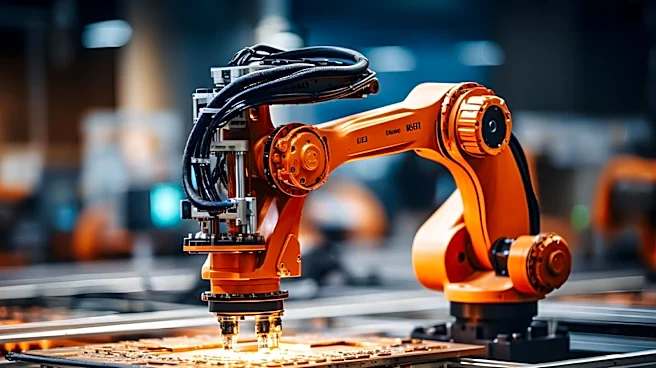
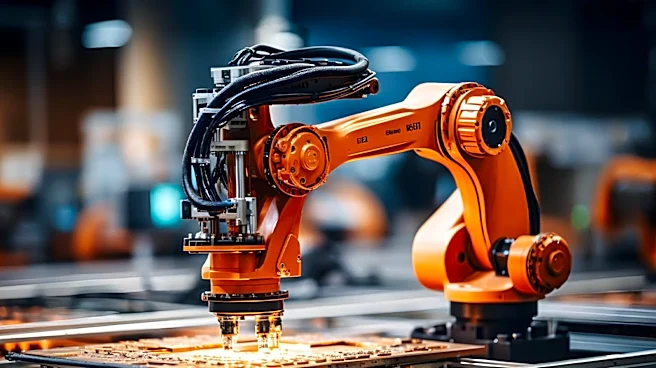
Physical AI, which integrates robotics with advanced artificial intelligence to create autonomous machines and smart manufacturing systems, is rapidly becoming a major growth area for startups. This sector saw a record $27.6 billion in funding across
1,009 deals in 2025, more than double the previous year's investment. Companies like Genesis AI, which secured a $105 million seed round, are developing wheeled robots capable of operating in commercial environments without mimicking human forms. Physical AI systems are designed to perceive surroundings, understand spatial context, make operational decisions, and act autonomously in real-time across various industrial settings. This advancement is driven by the simultaneous maturation and cost reduction of several key technologies, including multimodal sensing, edge computing, simulation environments, robotics foundation models, and world modeling systems. Industries such as manufacturing, automotive, logistics, and healthcare are actively piloting these robotics solutions to address labor costs, personnel scarcity, and productivity demands.
Why It's Important?
The surge in investment and development in physical AI signifies a significant shift in the technological landscape, indicating where future enterprise disruption is headed. This trend is crucial for U.S. industries facing challenges like rising labor costs and a shortage of skilled workers, as physical AI offers solutions for automation and increased productivity. The ability of these systems to continuously learn and improve through real-world interaction creates a compounding advantage for early adopters, potentially leading to substantial operational efficiencies and competitive differentiation. Companies that integrate physical AI into their operations can gain structural advantages, similar to how early cloud computing adopters built strong engineering cultures and data architectures. This development could reshape supply chains, manufacturing processes, and service delivery across multiple sectors, impacting job markets and requiring new skill sets.
What's Next?
The physical AI sector is currently entering a 'founder surge' stage, characterized by a high concentration of capital and founding activity, with a subset of these startups expected to break through corporate adoption barriers. As the technology matures, it will move towards industrialization, where it becomes operational infrastructure, making competitive entry more challenging for latecomers. Companies are expected to continue investing in and piloting physical AI solutions, with a focus on building continuous operational learning loops where physical interaction generates data, which in turn improves simulations and models, enhancing real-world performance. This will likely lead to further integration of AI into core business processes and a redesign of operational models to leverage these advanced autonomous systems.
Beyond the Headlines
The rise of physical AI presents deeper implications beyond immediate economic gains. Ethically, the increasing autonomy of machines in industrial and service roles raises questions about human-machine interaction, accountability in automated decision-making, and the future of work. Legally, frameworks may need to evolve to address liability for autonomous system failures and data privacy in environments where physical AI collects vast amounts of real-world data. Culturally, the widespread adoption of physical AI could lead to a redefinition of human labor and skills, potentially necessitating significant societal adjustments and educational reforms to prepare the workforce for a more automated future. The long-term shift could see a more integrated and intelligent physical world, where machines not only perform tasks but also adapt and learn, fundamentally altering how industries operate and how humans interact with their environment.