





What's Happening?
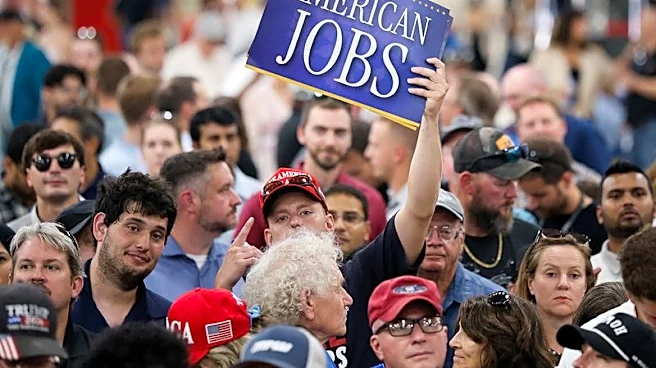
Spot gold and silver prices rallied following a weaker-than-expected July payrolls report, which led to lower Treasury yields and a softer US dollar. The negative payrolls print showed a decline of 23,000 nonfarm jobs, maintaining the unemployment rate
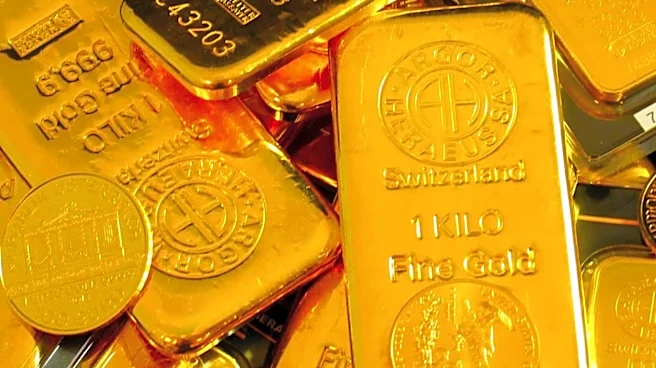
near 4.1%. This data prompted markets to reassess the Federal Reserve's stance on interest rates, reducing the likelihood of a rate hike in September. As a result, gold prices increased by 2.39% to approximately $4,340.60 per ounce, while silver rose by 3.19% to $63.350 per ounce. The weaker dollar and lower yields provided support for precious metals, as investors sought safe-haven assets amid economic uncertainty.
Why It's Important?
The rally in gold and silver prices highlights the sensitivity of precious metals to economic indicators and monetary policy expectations. The weaker payrolls report has shifted market sentiment, reducing pressure on the Federal Reserve to raise interest rates, which typically strengthens the dollar and weakens gold. This development is significant for investors and financial markets, as it influences asset allocation and risk management strategies. The softer dollar also impacts international trade and currency markets, affecting global economic dynamics. The situation underscores the interconnectedness of economic data, monetary policy, and commodity markets.
What's Next?
Investors will closely monitor upcoming economic data and Federal Reserve communications for further insights into interest rate policy. The trajectory of gold and silver prices will depend on the Fed's response to economic conditions and inflationary pressures. Additionally, geopolitical factors, such as the situation in the Strait of Hormuz, may influence market sentiment and commodity prices. Traders and analysts will assess the potential for continued dollar weakness and its impact on precious metals and broader financial markets.