






What's Happening?
BHP, the world's largest mining company, has seen its share price increase by 5% to A$53.82 ($35.50) following the announcement of its latest proposal to expand the Olympic Dam copper mine in South Australia. This marks the third attempt by BHP to significantly
increase production at the remote project. The new plan aims to integrate the original Olympic Dam mine with two nearby discoveries, Prominent Hill and Carrapateena, and potentially a fourth at Ankata, all part of a massive, deeply buried orebody. By 2035, BHP anticipates producing 500,000 tons of copper annually from this South Australian copper province, a volume expected to rival its existing iron ore and coking coal businesses. This expansion follows two previous attempts in 2006 and 2014, both of which were ultimately canceled due to high costs, low metal prices, and complex metallurgy.
Why It's Important?
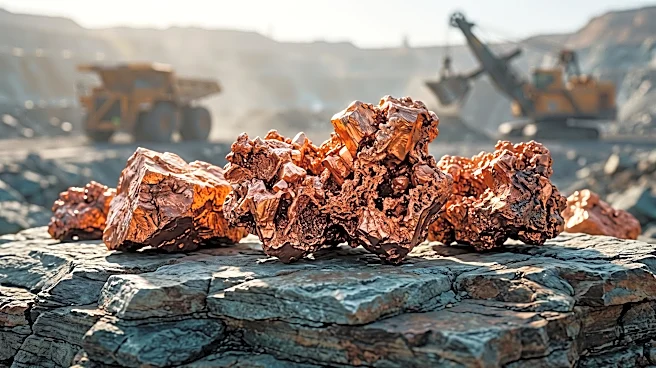
This expansion is significant for the global copper market and BHP's strategic positioning. If successful, the Olympic Dam project, combined with BHP's 57.5% interest in Chile's Escondida mine, could solidify the company's status as the world's leading copper supplier. Copper is a critical metal, with demand surging from various industries, including the rapidly expanding artificial intelligence (AI) data centers. The increased supply from BHP could help meet this growing demand, potentially stabilizing prices and ensuring a consistent supply for technological advancements. For BHP, this move represents a substantial investment in a key commodity, diversifying its revenue streams and strengthening its long-term growth prospects in the face of evolving industrial needs. The success of this 'third time lucky' endeavor could set a precedent for large-scale mining projects facing complex geological and economic challenges.
What's Next?
BHP's multi-decade expansion plan for the Olympic Dam project is now underway, with the company having already conducted tours for investment bank analysts, who have provided positive feedback. The focus will be on the execution of this ambitious plan, which involves integrating multiple mining sites into a single, massive operation. The company will need to navigate the historical challenges of high costs, fluctuating metal prices, and complex metallurgy that plagued previous expansion attempts. The market will closely monitor BHP's progress towards its 2035 production target of 500,000 tons of copper annually. The success of this project could influence future investment decisions in large-scale mining and the development of other complex ore bodies globally, particularly as demand for critical minerals continues to rise.
Beyond the Headlines
The Olympic Dam project highlights the intricate balance between resource extraction and economic viability, especially for complex ore bodies containing multiple valuable minerals like copper, uranium, and gold. The repeated attempts by BHP to expand the mine underscore the long-term strategic importance of these resources and the persistent challenges in bringing them to market efficiently. The project's success could also have broader implications for regional development in South Australia, creating jobs and stimulating economic activity. Furthermore, the increasing demand for copper, driven by technological advancements like AI, points to a future where access to and efficient extraction of critical minerals will be paramount, potentially leading to more innovative mining techniques and greater investment in geological exploration.