






What's Happening?
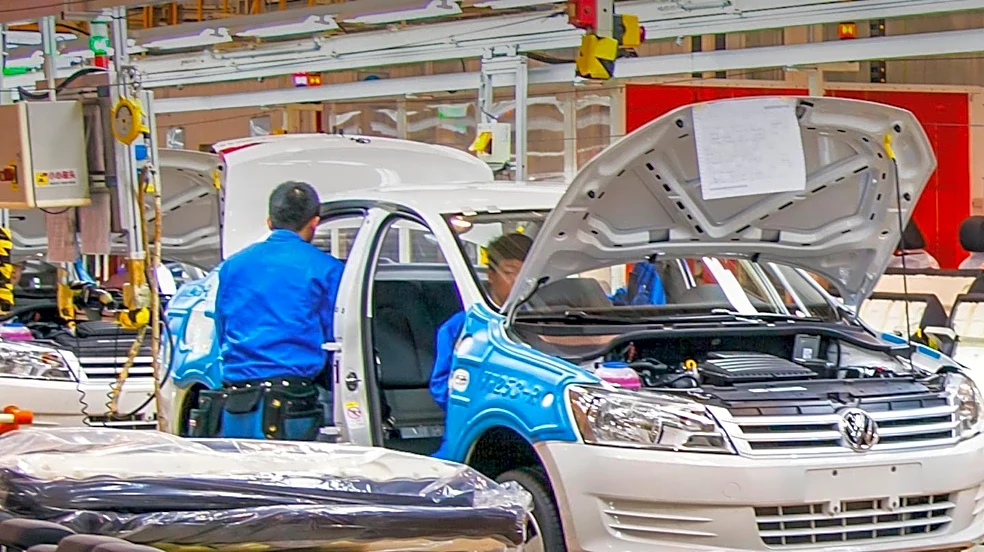
Schnellecke Logistics, the logistics service provider for Volkswagen's Chattanooga, Tennessee plant, has been awarded the first Volkswagen Group Logistics Award in the inhouse operations category. This recognition highlights their success in stabilizing
and improving logistics operations, particularly during the challenging launch of the ID.4 and the ramp-up to a third shift. The company focused on foundational improvements, including addressing high workforce turnover and standardizing work instructions, before implementing digital solutions. Riaan Steyn, manager of logistics inhouse at Volkswagen Group of America, noted the difficulty in retaining experienced staff due to the U.S. labor market's abundance of alternatives. Schnellecke Logistics brought recruitment in-house and established a training academy to better prepare new hires, leading to improved retention rates, with 68% of the hourly workforce now having over a year of service. Paulo Monteiro, head of logistics at Volkswagen Group of America Chattanooga Operations, nominated the plant for the award and has since extended Schnellecke's contract for an additional five years.
Why It's Important?
This award signifies a successful model for logistics management within the U.S. automotive manufacturing sector, particularly in navigating labor market challenges and integrating digital transformation. The approach taken by Schnellecke Logistics and Volkswagen Chattanooga, prioritizing foundational stability and workforce development before digitalization, offers a blueprint for other manufacturers facing similar operational hurdles. The improved retention rates and operational efficiencies, including joint savings of over $1 million in a single year, demonstrate the tangible benefits of this strategy. It underscores the importance of a collaborative customer-provider relationship, moving beyond traditional dynamics to foster a shared operational goal. This success can enhance Volkswagen's production capabilities in the U.S., contributing to its overall competitiveness and ability to meet market demands, especially for new electric vehicle models like the ID.4.
What's Next?
Following this recognition, Schnellecke Logistics and Volkswagen Chattanooga plan to continue their collaborative approach to continuous improvement. The success of their 'standards before systems, people before technology' philosophy is expected to be shared as a model for other Volkswagen plants globally. The team is already exploring further advancements, including implementing Bluetooth sensors in the warehouse to measure ergonomics, efficiency, and optimize forklift travel, aiming to design layouts where forklifts travel loaded in both directions. They are also working on digital twin technology to enhance safety around forklifts. This ongoing innovation, driven by employee feedback and a focus on simplifying tasks, suggests a sustained effort to refine logistics processes and maintain operational excellence at the Chattanooga plant. The extended contract for Schnellecke Logistics indicates a long-term commitment to this successful partnership.
Beyond the Headlines
The Chattanooga plant's achievement extends beyond operational metrics, highlighting a significant shift in corporate culture and partnership philosophy. The emphasis on listening to employees, fostering trust, and empowering first-line leadership to identify and implement solutions has created a more engaged and stable workforce. This human-centric approach to problem-solving, where ideas from the shop floor are actively solicited and acted upon, contrasts with traditional top-down management. The 'marriage and divorce' approach to partnerships, as mentioned in the broader context of Volkswagen's China strategy, underscores the strategic importance of effective collaborations. The Chattanooga success story demonstrates that genuine partnership, built on mutual trust and shared objectives, can lead to substantial and sustainable improvements, offering a valuable lesson for the automotive industry in an era of rapid technological change and evolving labor dynamics.