
What's Happening?
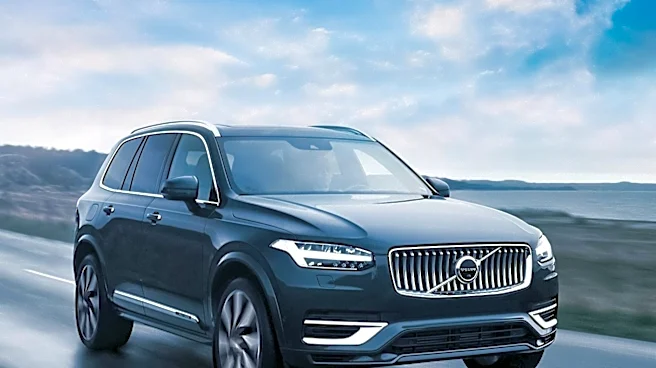
Volvo is set to introduce its 2028 XC60 and XC90 Plug-in Hybrid Electric Vehicles (PHEVs) to the U.S. market, featuring significantly increased all-electric ranges. The new XC60 PHEV will boast an estimated
78 miles of electric-only range, while its larger sibling, the XC90 PHEV, will offer 73 miles. These figures represent a near doubling of their previous electric ranges, positioning them as leaders in their segment for EV range in America. This enhancement is driven by a new, larger 37.9 kWh net/41.2 kWh gross battery pack, a substantial upgrade from the previous 18.8 kWh pack. Both models will retain a combined powertrain output of 455 hp and 550 lb-ft of torque from their 2.0-liter turbocharged four-cylinder engine and dual electric motors.
Why It's Important?
This development is crucial for the U.S. automotive market as it addresses a key consumer concern regarding PHEVs: electric range anxiety. By offering significantly extended electric-only driving capabilities, Volvo aims to make its PHEVs more appealing to a broader segment of buyers who desire the benefits of electric driving for daily commutes without the full commitment to a Battery Electric Vehicle (BEV). This move supports Volvo's broader strategy towards a zero-emission future, providing a transitional option for customers. The increased range could also qualify these vehicles for more incentives or benefits in certain states, further enhancing their market competitiveness against rivals like Lexus, Mercedes-Benz, and BMW. It signifies a strategic effort by Volvo to bridge the gap between traditional internal combustion engines and full electrification, catering to current market preferences where BEV adoption is still growing.
What's Next?
The 2028 Volvo XC60 and XC90 PHEVs are expected to go on sale in the first quarter of 2027. Pricing details will be released closer to the launch date, but the current model starts at $67,595. Volvo will continue to emphasize its commitment to electrification, with these PHEVs serving as a critical part of its strategy to offer an electrified option for every customer. The company also offers the fully electric EX60 with a 400-mile range for those ready for a complete EV experience. The success of these long-range PHEVs in the U.S. market will be closely watched as the automotive industry navigates the transition to electric vehicles.
Beyond the Headlines
Volvo's focus on maximizing PHEV electric range reflects a nuanced understanding of the current automotive market, where consumer acceptance of pure BEVs is still evolving. While Volvo maintains its long-term vision for an all-electric future, these enhanced PHEVs serve as a pragmatic solution to meet immediate consumer demand for electrified options that offer flexibility. This strategy acknowledges that many buyers are not yet ready for a full BEV due to factors like charging infrastructure concerns or higher upfront costs. By providing a compelling PHEV option, Volvo can gradually acclimate consumers to electric driving, potentially accelerating the broader transition to BEVs in the long run. This approach also highlights the ongoing innovation in battery technology and powertrain integration, pushing the boundaries of what PHEVs can offer in terms of performance and environmental benefits.