






What's Happening?
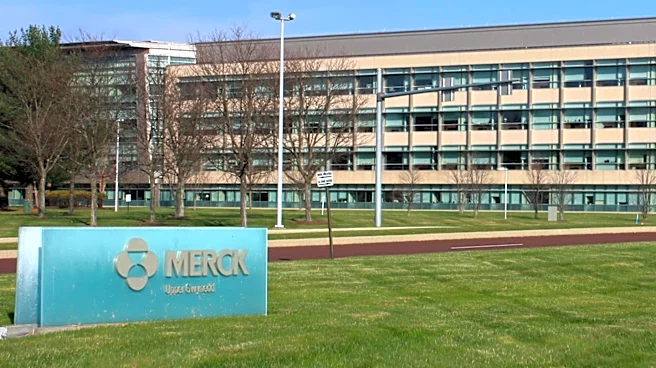
Merck & Co Inc reported a non-GAAP loss of $0.13 per share for Q2 2026, primarily due to a one-time charge from the acquisition of Terns Pharmaceuticals. Despite this, the company highlighted strong revenue growth driven by its new product launches, including
LIPFENDRA, the first oral PCSK9 inhibitor. However, the launch faces challenges such as establishing reimbursement and market access. Merck's KEYTRUDA sales are expected to moderate as the drug reaches peak market penetration. The company also faces competition in the PCSK9 market and delays in its flu prevention program, which could impact future earnings.
Why It's Important?
Merck's financial performance and strategic decisions are critical for its position in the pharmaceutical industry. The acquisition of Terns and the launch of LIPFENDRA represent significant investments in expanding its product portfolio. However, the associated costs and market challenges highlight the risks involved in pharmaceutical innovation and market entry. The company's ability to navigate these challenges will influence its long-term growth prospects and competitive standing. Additionally, the moderation of KEYTRUDA sales underscores the importance of diversifying revenue streams to mitigate the impact of patent expirations.
What's Next?
Merck plans to focus on establishing market access for LIPFENDRA and advancing its pipeline of new products. The company is also preparing for the upcoming ATLAS-UC readout, which will inform regulatory filings for its tulisokibart program. Merck aims to leverage its recent acquisitions and product launches to drive growth, despite the challenges posed by competition and regulatory hurdles. The company's strategic focus on innovation and market expansion will be crucial in maintaining its leadership in the pharmaceutical industry.