





What's Happening?
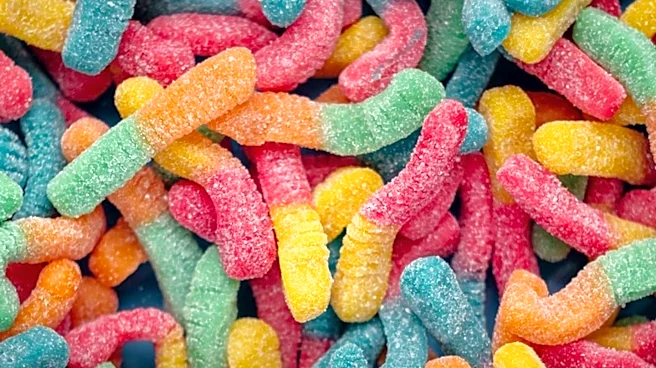
Haribo Smurfs are gummi candies that feature strawberry and raspberry flavors, shaped into popular Smurf characters such as Papa Smurf and Smurfette. These gummies are distinctively blue, with various characters sporting red, white, and yellow caps. Each
piece is approximately an inch and a half tall, offering a substantial size for a gummi candy. The product combines classic berry flavors with the nostalgic appeal of the Smurfs cartoon, which gained popularity in the U.S. during the 1980s and saw continued interest with the release of 'Smurfs 2' in 2013. Haribo, the company behind these gummies, has a long history in candy making, originating in the 1920s when Hans Riegel began producing gummi dancing bears. The company's name, Haribo, is derived from its founder's name and hometown: HA for Hans, RI for Riegel, and BO for Bonn, Germany. Each bag of Haribo Smurfs contains approximately 20 pieces.
Why It's Important?
The introduction or continued availability of Haribo Smurfs gummi candies is significant for the confectionery market, particularly within the U.S. This product leverages strong brand recognition from the Smurfs franchise, which has a multi-generational appeal, spanning from those who watched the cartoon in the 1980s to younger audiences familiar with recent films. This nostalgia factor can drive sales among adult consumers, while the fun shapes and berry flavors attract children. For Haribo, a company with a long-standing reputation for quality gummies, the Smurfs line reinforces its diverse product portfolio and ability to integrate popular culture into its offerings. The product's appeal also highlights the enduring market for character-themed candies, which often outperform generic alternatives due to emotional connections consumers have with beloved figures. This strategy helps Haribo maintain its competitive edge in a crowded candy market, appealing to both taste preferences and sentimental value.
What's Next?
The continued presence of Haribo Smurfs in the market suggests ongoing consumer demand for character-themed and fruit-flavored gummies. Future developments could include seasonal variations of the Smurfs gummies, such as special packaging for holidays or limited-edition flavor combinations to maintain consumer interest. Haribo might also explore cross-promotional opportunities with new Smurfs media, such as upcoming movies or television series, to further boost product visibility and sales. Retailers are likely to continue stocking these popular candies, especially in family-oriented stores and during peak candy-buying seasons. The success of such licensed products often encourages other confectionery companies to pursue similar collaborations, potentially leading to a broader range of character-branded sweets in the market. Consumer feedback on flavors and character representation could also influence future product iterations or expansions within the Smurfs candy line.
Beyond the Headlines
Beyond their immediate market impact, Haribo Smurfs gummi candies represent a broader trend in consumer goods: the enduring power of intellectual property and nostalgia in driving purchasing decisions. The Smurfs, originating from Belgian comics, have become international icons, demonstrating how cultural products can transcend their initial medium and find new life in various forms, including confectionery. This phenomenon highlights the value of brand licensing, where established characters lend their appeal to products, creating instant recognition and trust among consumers. Ethically, the marketing of such products often targets children, raising discussions about responsible advertising and the promotion of healthy eating habits, even as these treats are enjoyed in moderation. The longevity of brands like Haribo and characters like the Smurfs also speaks to the cultural significance of childhood memories and the comfort consumers find in familiar, beloved figures, influencing purchasing patterns across generations.