






What's Happening?
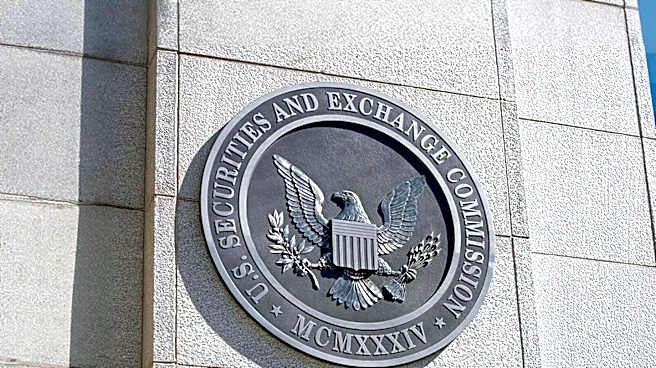
The U.S. Securities and Exchange Commission (SEC) has announced its decision to dismiss an insider trading lawsuit against Terren Peizer, a former healthcare executive. Peizer, who was the founder and former CEO of Ontrak, was previously convicted of insider trading by
a federal jury in 2024. He was charged by the Department of Justice in 2023 for selling over $20 million of Ontrak stock while possessing non-public negative information about the company’s largest customer. This case was notable for being the first criminal case involving a pre-arranged stock-selling program. Peizer was sentenced to 3.5 years in prison in 2025 but was pardoned by President Donald Trump in January 2026. The SEC had also filed civil charges against him in a parallel action.
Why It's Important?
The dismissal of the insider trading lawsuit against Terren Peizer highlights the complexities and controversies surrounding presidential pardons, particularly those issued by President Trump. Peizer's case was significant due to its groundbreaking nature, involving a pre-arranged stock-selling program. The decision to drop the charges may raise questions about the consistency and fairness of legal proceedings in high-profile financial crimes. It also underscores the influence of presidential pardons on the judicial process, potentially affecting public trust in the legal system. Critics have pointed to such pardons as examples of double standards, especially when juxtaposed with President Trump's hardline stance on immigration and fraud claims against migrants.
What's Next?
The SEC's decision to dismiss the lawsuit may lead to further scrutiny of the use of presidential pardons in cases involving financial crimes. Legal experts and rights advocates might call for reforms to ensure greater transparency and accountability in the pardon process. Additionally, this development could prompt discussions within the financial industry about the ethical implications of pre-arranged stock-selling programs and their potential for abuse. Stakeholders, including policymakers and regulatory bodies, may consider revisiting regulations to prevent similar cases in the future.
Beyond the Headlines
The case of Terren Peizer also sheds light on the broader cultural and ethical implications of insider trading and executive accountability. It raises questions about the role of corporate governance in preventing financial misconduct and the responsibilities of executives to uphold ethical standards. The use of pre-arranged stock-selling programs, intended to protect executives from insider trading accusations, may need reevaluation to ensure they do not become tools for circumventing legal accountability. This case could influence future corporate policies and the development of more robust compliance frameworks.