







What's Happening?
The First Trust North American Energy Infrastructure Fund (EMLP) and the iShares Global Clean Energy ETF (ICLN) represent two distinct investment approaches within the energy sector. EMLP focuses on North American fossil fuel and utility infrastructure,
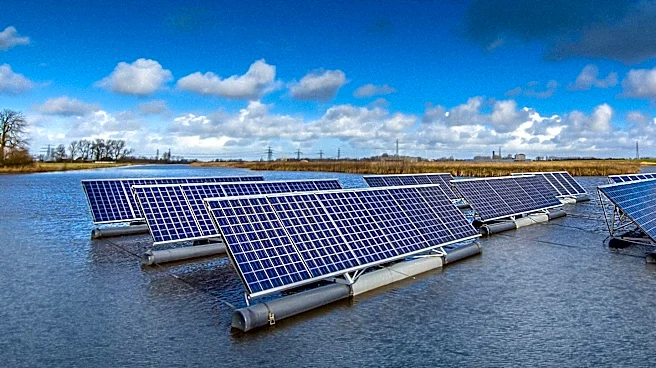
managing 65 positions primarily in energy infrastructure (48%) and utilities (46%). Its top holdings include Enterprise Products Partners L.P., Energy Transfer LP, and Plains GP Holdings, L.P. EMLP, launched in 2012, has a higher expense ratio of 0.95% and a dividend yield of 2.8%. In contrast, ICLN offers a global, tech-oriented renewable energy portfolio with 106 holdings, heavily tilted towards utilities (40%), energy (29%), and industrials (24%). Its major holdings include First Solar, China Yangtze Power Ltd A, and Bloom Energy. ICLN, launched in 2008, has a lower expense ratio of 0.39% and a dividend yield of 1.1%. Over five years, EMLP delivered $2,139 on a $1,000 investment with a maximum drawdown of 14.6%, while ICLN saw a peak decline of 57.2%.
Why It's Important?
These two ETFs highlight the divergent investment philosophies and market trends within the U.S. energy sector. EMLP's focus on traditional fossil fuel and utility infrastructure appeals to investors seeking steady income and lower volatility, as indicated by its higher dividend yield and lower maximum drawdown. This reflects the continued importance of established energy infrastructure in the U.S. economy. Conversely, ICLN's emphasis on global clean energy and technology caters to investors interested in the growth potential of renewable sources, despite higher volatility. The differing performance and risk profiles underscore the ongoing transition in the energy landscape, where both traditional and renewable energy sources play critical roles. The preference for clean energy by tech companies funding AI data centers suggests a future tailwind for ICLN, even as current federal policies may favor fossil fuels. This dynamic impacts investment strategies, capital allocation, and the overall direction of energy development in the U.S.
What's Next?
The energy sector is undergoing a significant transformation, driven by factors such as the artificial intelligence boom, which is leading to soaring electricity demand. This increased demand is expected to create a multi-year tailwind for energy stocks. Investors will continue to weigh the benefits of stable income from traditional energy infrastructure, as offered by EMLP, against the growth potential and environmental alignment of clean energy, represented by ICLN. The future performance of these ETFs will likely be influenced by evolving energy policies, technological advancements in renewables, and the pace of electrification across various sectors. The U.S. Department of Energy's warning of potential electricity shortages by 2030 further emphasizes the critical need for investment in both traditional and clean energy infrastructure, suggesting that both types of funds may find opportunities for growth, albeit with different risk-reward profiles.
Beyond the Headlines
The contrasting investment strategies embodied by EMLP and ICLN reflect a deeper societal and economic debate about the future of energy. EMLP represents the enduring legacy and necessity of existing energy infrastructure, which continues to power much of the U.S. economy. ICLN, on the other hand, symbolizes the aspirational shift towards a sustainable future, driven by innovation and environmental consciousness. The performance of these funds can be seen as a barometer for the success of different energy policies and technological advancements. The increasing demand for clean energy from major tech players for AI data centers suggests a powerful market force that could accelerate the transition to renewables, potentially reshaping the entire energy landscape and influencing long-term economic and environmental outcomes.