








What's Happening?
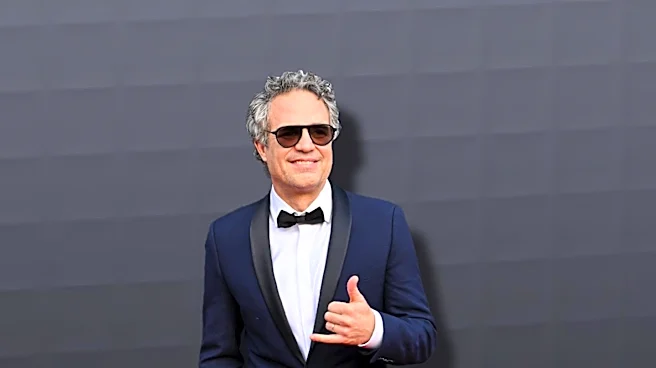
More than 170 Jewish figures in the entertainment industry, including Joel Coen, Hannah Einbinder, and Tony Kushner, have signed an open letter defending actor Mark Ruffalo against accusations of antisemitism. This defense comes after Ruffalo linked the proposed
merger between Paramount and Warner Bros. Discovery to the conflict in Gaza and the involvement of Oracle, a technology company whose executive vice chair, Safra Catz, spoke about providing 'profoundly scary technology' to Israel. Ruffalo had criticized Oracle co-founder Larry Ellison, whose son David Ellison is leading the Paramount acquisition, for allegedly using Oracle to fund the merger and for 'powering some of the most destructive and inhuman forces in the world.' Paramount had previously condemned Ruffalo's remarks as 'antisemitic tropes,' stating that applying terms like 'genocide' and 'apartheid' to a corporate transaction was a 'bridge too far.' The open letter argues that pointing out connections between events in Gaza and Hollywood is not antisemitic but rather an 'essence of Jewish ethical duty,' and that the accusations against Ruffalo are a 'false and dangerous weaponization of charges of antisemitism.'
Why It's Important?
This controversy highlights a significant cultural and political divide within the entertainment industry and broader society regarding criticism of Israel and its connection to corporate interests. The open letter from over 170 Jewish figures challenges the narrative that any criticism linking business dealings to the Israeli-Palestinian conflict is inherently antisemitic. This stance could embolden other public figures to voice similar concerns without fear of immediate backlash, potentially shifting the discourse around corporate responsibility and geopolitical issues. The involvement of high-profile individuals like Mark Ruffalo and the signatories of the letter amplifies the debate, bringing it to a wider audience and forcing a re-evaluation of how accusations of antisemitism are used. It also underscores the growing scrutiny of large corporate mergers, particularly when they involve figures with significant political and technological influence, and how these mergers can become intertwined with complex international conflicts.
What's Next?
The ongoing debate is likely to continue, with potential further statements from both sides of the argument. Paramount and its CEO, David Ellison, may face continued pressure to address the concerns raised by Ruffalo and his supporters regarding the ethical implications of the merger and its alleged connections to the Israeli-Palestinian conflict. The antitrust challenge against the merger, currently delayed by a coalition of 12 states, could also see renewed focus on the broader implications beyond traditional economic competition, potentially incorporating ethical and geopolitical considerations. The entertainment industry may experience further polarization as artists and executives take sides, potentially impacting future collaborations and productions. This situation could also lead to increased public scrutiny of the financial backing and political affiliations of major corporations, especially those involved in media and technology.
Beyond the Headlines
This event delves into the complex interplay between corporate power, media consolidation, and international politics, particularly the Israeli-Palestinian conflict. The accusation of antisemitism against Ruffalo and the subsequent defense by a large group of Jewish entertainment figures reveal a deeper struggle over the definition and application of antisemitism, and whether it can be legitimately invoked to silence criticism of Israeli policies or business dealings connected to them. It also raises questions about the role of technology companies like Oracle in military contexts and the ethical responsibilities of their executives. The controversy suggests a growing awareness and willingness among some in the entertainment industry to connect seemingly disparate issues—corporate mergers, technological advancements, and geopolitical conflicts—and to challenge powerful figures and institutions on moral and ethical grounds. This could signify a broader cultural shift where public figures are increasingly expected to address the societal impact of their professional and financial activities.