



What's Happening?
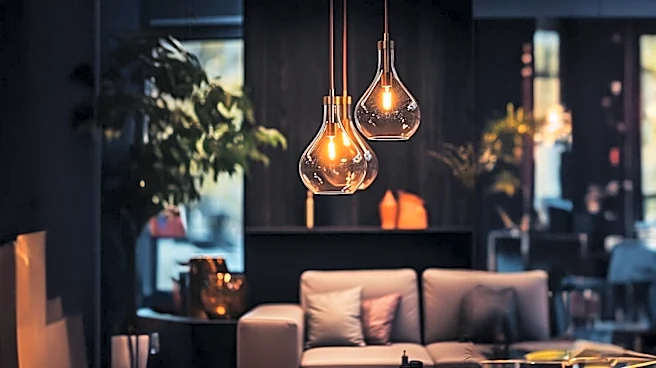
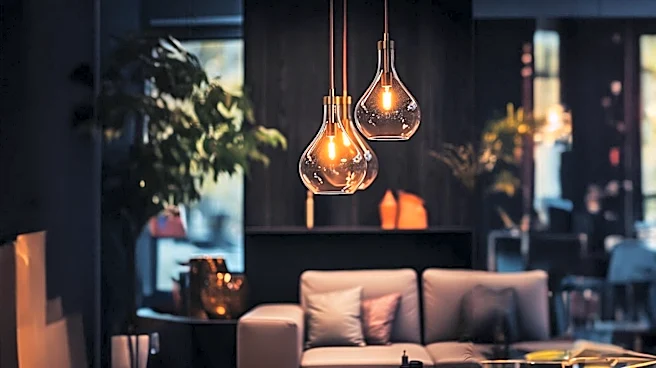
The Hangke guide for retailers and bulk buyers emphasizes a shift in lighting design towards 'layered lighting,' which involves combining ceiling, wall, and portable light sources at different heights. The guide advises against furnishing an entire room
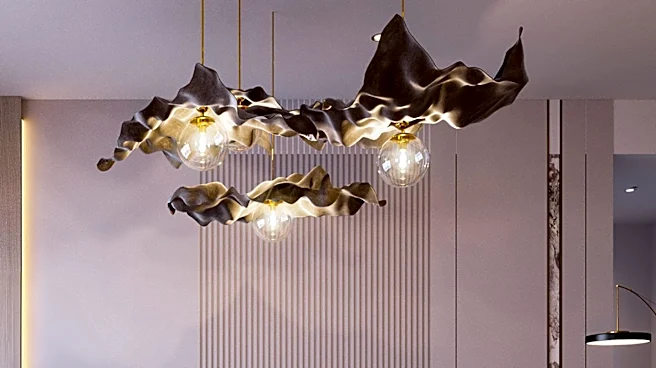
with identical matched fixtures, as this tends to create a 'builder showroom' aesthetic rather than a curated interior. Instead, Hangke recommends offering 'coordinated series' of lighting pieces that share a finish, proportion, or construction language but vary in form and scale. This approach allows for a cohesive design while providing the necessary range for ambient, task, and accent lighting. For retailers, this means structuring their catalogs to offer full room solutions within a single series, enabling customers to purchase all layers of lighting from one supplier.
Why It's Important?
This recommendation from Hangke is crucial for U.S. retailers and bulk buyers in the lighting industry, as it directly impacts product assortment planning and sales strategies. By advocating for coordinated series over matched sets, Hangke highlights a significant trend in consumer preference towards more sophisticated and personalized interior design. Retailers who adapt to this trend by offering comprehensive, layered lighting solutions are better positioned to capture a larger share of the customer's basket, as customers are more likely to purchase multiple items from a single, cohesive collection. This approach also helps retailers differentiate themselves in a competitive market by providing curated solutions rather than just individual fixtures. For manufacturers, it signals a need to develop product lines that are designed as families, ensuring consistency in design language, finishes, and batch quality across various lighting types.
What's Next?
The shift towards coordinated lighting series will likely lead to a restructuring of product offerings within the U.S. lighting retail sector. Expect to see more manufacturers designing and marketing their products as integrated collections rather than standalone pieces. Retailers will increasingly focus on merchandising these series to demonstrate how different fixtures can work together to create a layered lighting scheme. This could also influence marketing campaigns, which will likely emphasize the 'room solution' aspect rather than individual product features. Furthermore, as this trend gains traction, there may be a greater demand for design tools and services that help consumers visualize and plan their layered lighting schemes, potentially integrating augmented reality or AI-powered design assistants into the retail experience. The emphasis on coordinated families will also push for higher standards in finish and batch consistency across different product types from manufacturers.
Beyond the Headlines
The move from matched lighting sets to coordinated series reflects a deeper evolution in consumer taste and design philosophy. It signifies a departure from mass-produced, uniform aesthetics towards a more individualized and artisanal approach to home decor. This trend aligns with a broader cultural appreciation for craftsmanship, thoughtful curation, and the creation of unique, personalized spaces. It also underscores the growing influence of interior designers and design-focused media, which consistently advocate for layered and nuanced lighting schemes. For the U.S. market, this means that consumers are becoming more educated and sophisticated in their design choices, demanding products that not only serve a function but also contribute to a cohesive and aesthetically rich environment. This shift encourages a more sustainable approach to consumption, as well-designed, coordinated pieces are often perceived as more timeless and less prone to rapid obsolescence.