


What's Happening?
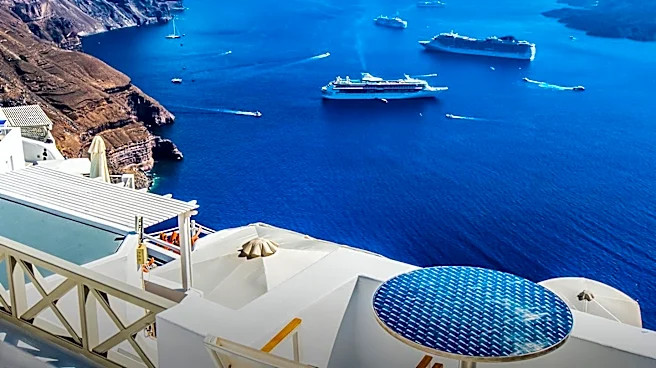
Santorini's hot springs, located in Agios Nikolaos bay on Palia Kameni, one of the volcanic islets in the caldera, are a unique natural attraction. The water, warmed by underground magma to temperatures between 28 and 35 degrees Celsius, is rich in iron
and sulfur, giving it a distinctive ochre color. Access to these hot springs is exclusively by boat, as there are no roads or land connections. Visitors must swim 50 to 80 meters from the anchored boats to reach the warmer waters near the shore. This experience is often combined with a hike to the crater of Nea Kameni, the younger volcanic islet, offering panoramic views of the caldera. The hot springs are not a developed spa but rather a natural bay, and visitors are advised about the potential for iron oxides to permanently stain swimwear.
Why It's Important?
The Santorini hot springs represent a significant geological and tourist attraction, showcasing the island's volcanic origins and offering a distinct experience compared to traditional thermal baths. The unique composition of the water and the necessity of swimming to reach the springs contribute to its adventurous appeal. For the local tourism industry, these hot springs are a key component of boat tours, drawing visitors interested in both the natural beauty and geological history of Santorini. Understanding the specific conditions, such as the required swim and the staining potential of the water, is crucial for managing visitor expectations and ensuring a positive experience, thereby sustaining the reputation of Santorini as a diverse travel destination.
What's Next?
Future developments for the Santorini hot springs will likely focus on managing visitor flow and enhancing the overall experience while preserving the natural environment. Tour operators may continue to refine schedules to avoid peak crowding, particularly during the busiest months of July and August. There could be increased emphasis on informing visitors about practical considerations, such as appropriate swimwear and the need for confident swimming abilities, to prevent dissatisfaction. Efforts might also be directed towards promoting off-peak seasons like June and September, when the weather is pleasant and crowds are smaller, to ensure a more tranquil experience at the hot springs. The integration of the hot springs experience with other caldera attractions, such as the Nea Kameni crater walk, will remain a central offering.
Beyond the Headlines
The Santorini hot springs offer more than just a warm swim; they provide a tangible connection to the island's powerful volcanic forces and geological evolution. The ochre-colored water and the surrounding volcanic landscape serve as a living laboratory, illustrating the ongoing geological processes that shaped Santorini. This natural phenomenon also raises questions about sustainable tourism and the balance between visitor access and environmental preservation. The unique challenges, such as the open-water swim and the staining properties of the water, contribute to the authenticity of the experience, distinguishing it from more commercialized attractions. It underscores the idea that some of nature's most compelling wonders require a degree of engagement and preparation from visitors, fostering a deeper appreciation for the raw, untamed aspects of the natural world.