



What's Happening?
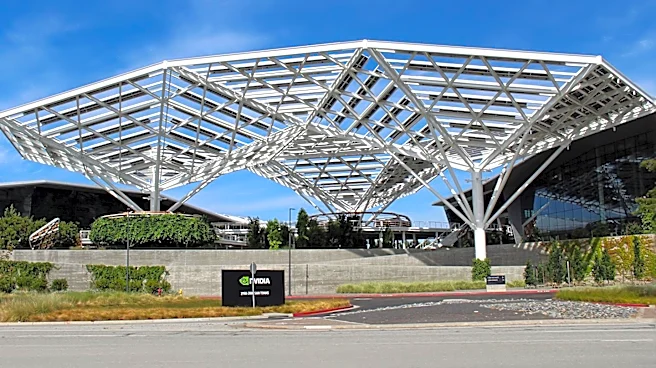
SpaceX has secured a $43 billion financing deal, dubbed 'Project Saturn,' to acquire Nvidia AI chips for its ambitious data center projects. This agreement, structured similarly to aircraft leasing, involves a subsidiary of asset-backed lending company
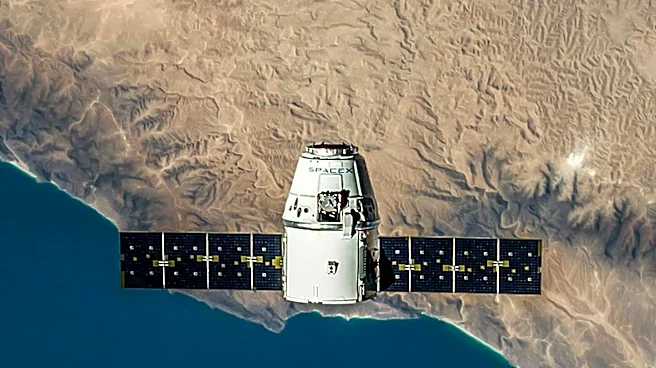
WHCO, Saturn Funding Trust, purchasing the GPUs and leasing them to SpaceX. SpaceX will make quarterly payments over a five-year 'triple-net, hell-or-high-water finance lease arrangement,' meaning the company bears all operational risks and costs. While SpaceX has stated the collateralized chips will be deployed in its U.S. data centers, lenders are reportedly concerned that the chips could eventually be used in SpaceX's planned orbital data centers, making them difficult or impossible to reclaim if SpaceX defaults on the loan. This concern persists despite SpaceX's assurances of Earth-bound deployment, and it remains unclear if an explicit Earth-only guarantee is included in the signed debt instrument.
Why It's Important?
This significant financing deal highlights the massive capital requirements for advanced AI infrastructure and the innovative financial structures being employed to fund such ventures. The concerns raised by lenders about the potential orbital deployment of the Nvidia AI chips underscore the unique challenges and risks associated with space-based assets as collateral. If the chips were to be placed in orbit, their recovery in the event of a default would be logistically complex and potentially cost-prohibitive, creating a novel risk profile for lenders. This situation could influence future financing models for companies involved in both terrestrial and extraterrestrial technological development, potentially leading to new clauses or stricter collateral requirements for space-related projects. The deal also reflects the growing demand for high-performance AI chips to power large language models and other advanced AI applications, indicating a significant investment trend in the AI sector.
What's Next?
The immediate next step involves the execution of the 'Project Saturn' lease agreement and the deployment of the Nvidia AI chips in SpaceX's U.S. data centers. The ongoing concern among lenders regarding the potential for orbital deployment may lead to further scrutiny of the contractual language and potentially influence future financing negotiations for similar high-tech, dual-use assets. SpaceX's continued development of its terrestrial AI supercomputers, including a $24-billion gas-powered facility in Starbase, Texas, and the Colossus sites, will proceed. The company's long-term plans for orbital data centers, including its first-generation AI1 satellite, will likely continue to evolve, potentially necessitating new financial instruments or guarantees to address lender anxieties about collateral recovery in space.
Beyond the Headlines
The 'Project Saturn' deal and the associated lender concerns illuminate a nascent but critical legal and financial frontier: the securitization and recovery of assets in space. As commercial space activities expand, the traditional frameworks for collateral and debt recovery, largely designed for terrestrial assets, will need to adapt. The ambiguity surrounding the 'Earth-only' guarantee in this deal could set a precedent for how future space-related financing is structured, potentially leading to the development of specialized space law and insurance products. This situation also highlights the strategic importance of AI infrastructure, with companies like SpaceX making massive investments to gain a competitive edge in the rapidly evolving AI landscape, pushing the boundaries of both technology and finance into new domains.