

What's Happening?
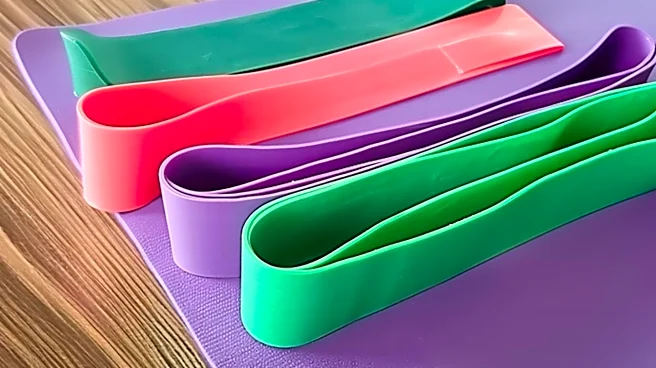
Fitness experts are evaluating the distinct advantages of resistance bands and sliders for at-home core workouts, emphasizing their effectiveness in limited spaces. Resistance bands are highlighted for their linear variable resistance, which increases
tension proportionally with stretch, thereby maximizing muscle fiber recruitment during contraction. This mechanism, governed by Hooke's Law, ensures peak engagement when muscles are mechanically strongest, making them ideal for dynamic movements like standing woodchops. Conversely, sliders are praised for enhancing core stability, endurance, and coordination by introducing friction and demanding neuromuscular control. They force muscles to stabilize the body against instability, particularly during eccentric lengthening, which challenges the nervous system to maintain joint alignment. The choice between these tools, or a hybrid approach, depends on individual fitness levels and specific biomechanical goals, with bands excelling in progressive overload and sliders in eccentric control and stabilizer muscle activation.
Why It's Important?
The detailed comparison of resistance bands and sliders is crucial for individuals seeking efficient and effective home fitness solutions, especially in the U.S. where at-home workouts have gained significant traction. This information empowers consumers to make informed decisions about fitness equipment, avoiding unnecessary expenses on ineffective tools. By understanding the unique biomechanical benefits of each, users can tailor their core training to specific needs, whether it's building muscular strength with bands or improving stability and endurance with sliders. This knowledge can lead to more targeted and productive workouts, ultimately contributing to better physical health outcomes and reduced injury risk. Furthermore, the emphasis on proper equipment quality, such as fabric-covered bands and dual-sided sliders, underscores the importance of safety and durability in home fitness products, influencing consumer purchasing habits and industry standards.
What's Next?
The market for compact home fitness equipment is expected to continue its growth, with manufacturers likely to innovate further in resistance band materials and slider designs to enhance user experience and durability. Fitness content creators and personal trainers will likely develop more specialized programs that integrate both resistance bands and sliders, offering hybrid workout routines that maximize the benefits of each tool. Educational resources will also expand, providing clearer guidance on how to select the right equipment based on individual fitness goals, space constraints, and potential sensitivities (e.g., latex allergies). Consumers can anticipate more detailed product reviews and comparisons, helping them navigate the increasing array of options. This ongoing evolution will solidify the role of these compact tools as staples in effective at-home core training, making advanced fitness principles accessible to a broader audience.
Beyond the Headlines
Beyond their immediate utility in fitness, the popularity of resistance bands and sliders reflects a broader cultural shift towards accessible and adaptable wellness practices. These tools symbolize a move away from the intimidating and often expensive gym environment, democratizing fitness and empowering individuals to integrate physical activity seamlessly into their daily lives. The emphasis on understanding the 'physics' behind these tools fosters a more educated and mindful approach to exercise, encouraging users to connect with their bodies and the mechanics of movement. This trend also highlights the growing value placed on functional strength and stability, which are crucial for everyday activities and long-term health, rather than solely focusing on aesthetic outcomes. The ability to achieve significant fitness results with minimal equipment also promotes sustainability, reducing the environmental impact associated with larger, more resource-intensive fitness machines.