







What's Happening?
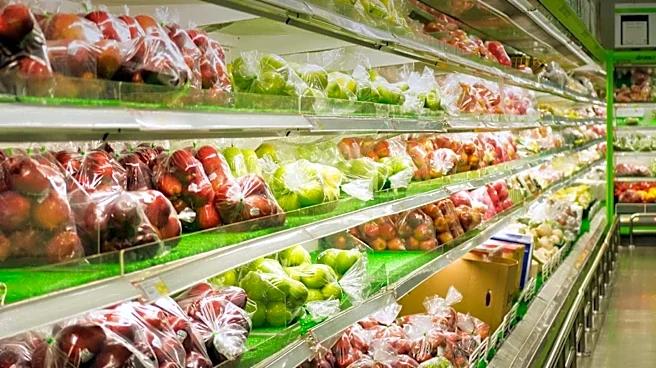
The recent heatwave in the UK has highlighted significant vulnerabilities in the cold chain systems that retailers rely on to keep food safe. With temperatures reaching record highs, supermarket fridges and freezers have failed, leaving some chilled and frozen
food sections empty. The cold chain, which includes refrigerated storage, vehicles, and distribution centers, is under pressure as older refrigeration systems struggle to cope with extreme temperatures. Wiliot, a technology company, is addressing these challenges by using small, battery-free Bluetooth Low Energy tags to provide continuous visibility of temperature and humidity conditions throughout the supply chain.
Why It's Important?
The heatwave's impact on the cold chain underscores the need for retailers to adapt to increasingly extreme weather conditions. Failures in the cold chain can lead to food spoilage, affecting product quality and safety, and resulting in financial losses for retailers. The situation highlights the importance of investing in modern refrigeration infrastructure and adopting advanced monitoring technologies to ensure the integrity of perishable goods. As climate change continues to drive more frequent and severe heatwaves, the retail sector must prioritize resilience in its supply chain operations.
What's Next?
Retailers may need to consider a combination of investment in physical infrastructure and the adoption of advanced monitoring technologies to enhance the resilience of their cold chain systems. This could involve upgrading older refrigeration units and integrating continuous monitoring solutions to track temperature and humidity conditions in real-time. As the retail sector adapts to a hotter climate, collaboration with technology providers like Wiliot could play a crucial role in ensuring food safety and minimizing losses due to spoilage.