




What's Happening?
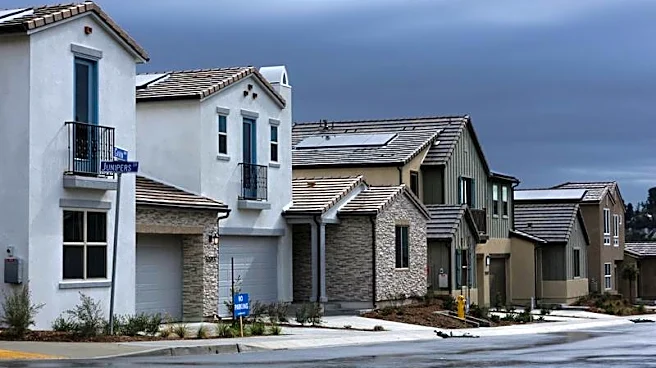
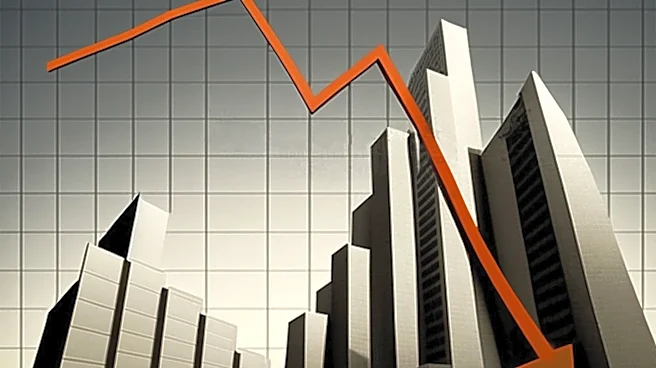
Mortgage application volumes in the U.S. declined last week, following a period of stronger activity earlier in November. The Mortgage Bankers Association (MBA) reported a 2.3% drop in its Market Composite Index, with purchase and refinance applications
significantly lower than year-ago levels. The average 30-year fixed mortgage rate rose to 7.35%, its highest in three weeks, impacting loans conforming to Fannie Mae and Freddie Mac underwriting rules. A year ago, these rates averaged 6.37%. Federal Housing Administration (FHA) insured mortgages, with slightly lower rates, saw a 7% increase in refinance applications. Federal Reserve Governor Christopher Waller indicated that a half-point interest rate hike might be necessary in December to combat reaccelerating inflation.
Why It's Important?
The rising mortgage rates and declining application volumes signal a significant challenge for the U.S. housing market and prospective homebuyers. The increase in 30-year fixed mortgage rates, particularly for Fannie Mae and Freddie Mac conforming loans, directly impacts affordability, making homeownership less accessible for many. This trend can slow down housing market activity, affecting real estate agents, construction companies, and related industries. The Federal Reserve's potential aggressive rate hikes, as suggested by Governor Waller, aim to curb inflation but could further dampen mortgage demand and economic growth. The slight advantage of FHA-insured mortgages highlights a segment of the market where borrowers are seeking more affordable options, potentially shifting demand towards government-backed loans.
What's Next?
The Federal Reserve's upcoming December meeting will be crucial, with expectations of a potential quarter-point or even a half-point interest rate hike. Such a move would likely lead to further increases in mortgage rates, continuing to suppress demand for both new home purchases and refinances. The MBA anticipates additional rate hikes into the first quarter of 2027. Borrowers may increasingly turn to adjustable-rate mortgages (ARMs) or FHA-insured loans, which currently offer lower initial costs. The housing market will likely experience continued pressure on affordability and sales volumes, potentially leading to a slowdown in price appreciation or even declines in some areas, as the Fed prioritizes inflation control.
Beyond the Headlines
The current mortgage market dynamics reflect a broader economic tension between controlling inflation and maintaining economic growth. The Federal Reserve's aggressive stance, while necessary to stabilize prices, carries the risk of a significant slowdown in the housing sector, which is a major component of the U.S. economy. The widening gap between conventional mortgage rates and FHA-insured rates could exacerbate existing inequalities in housing access, as those with less capital or lower credit scores might be disproportionately affected by higher conventional rates. This situation also underscores the sensitivity of the housing market to monetary policy decisions and the interconnectedness of inflation, interest rates, and consumer purchasing power. The long-term implications could include a re-evaluation of housing affordability policies and the role of government-backed entities like Fannie Mae and Freddie Mac in a high-interest-rate environment.