







What's Happening?
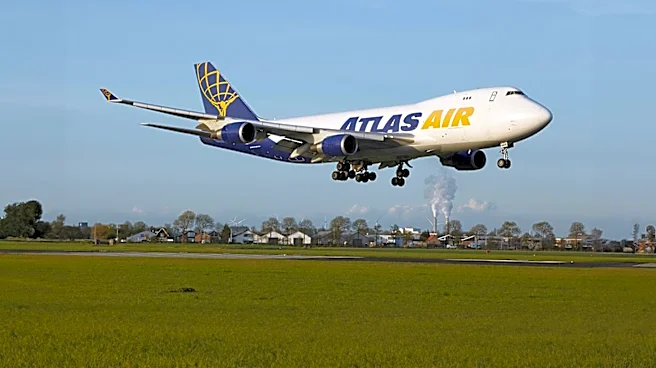
Boeing's 2026 World Air Cargo Forecast predicts that global air cargo traffic will double over the next two decades, leading the freighter fleet to exceed 4,000 airplanes by 2045. This growth is primarily fueled by the increasing demand for time-sensitive
shipments related to advanced manufacturing and AI hardware, the diversification of supply chains, and the continuous rise of e-commerce volumes. The forecast, released at The International Air Cargo Association’s Air Cargo Forum in Miami, highlights that air cargo networks are adapting to evolving trade flows, geopolitical disruptions, and shifting production locations. In 2025, global air cargo traffic reached a new annual record, growing nearly 5% year over year from 2024, despite trade volatility. Over 70% of AI-related goods were transported by air in 2025, underscoring the sector's critical role in supporting high-tech industries. Structural growth drivers and proven resilience are expected to support an annual air cargo traffic growth of 3.5% over the next two decades, with trade flows involving Asia leading this expansion and representing approximately 60% of the global market.
Why It's Important?
The projected doubling of air cargo traffic signifies a substantial economic opportunity and a critical shift in global logistics and supply chain management. For U.S. industries, particularly those in advanced manufacturing, technology, and e-commerce, this growth ensures reliable and rapid transportation of high-value and time-sensitive goods. The increased demand for AI hardware shipments highlights the accelerating pace of technological advancement and its reliance on efficient global supply chains. This trend will likely spur investment in new freighter aircraft, air cargo infrastructure, and logistics technologies, creating jobs and fostering innovation within the U.S. aerospace and logistics sectors. Furthermore, the adaptability of air cargo networks to geopolitical disruptions and changing trade lanes provides a crucial layer of resilience for U.S. businesses navigating an increasingly complex global economic landscape. The emphasis on dedicated freighters, which are expected to carry more than half of global air cargo traffic, underscores the strategic importance of specialized air transport capabilities for maintaining competitive advantage in international trade.
What's Next?
To meet the anticipated demand, operators will need approximately 2,930 new and converted freighters over the next 20 years. About 55% of these deliveries will add new capacity, while the remaining 45% will replace older, less efficient aircraft. Two-thirds of these deliveries are expected to be converted passenger airplanes, with the rest being new-production freighters. This will drive significant activity in the aircraft manufacturing and conversion industries. The growing demand for express services is also projected to increase the share of integrators (time-definite and express operators) in global air cargo traffic to nearly 25% by 2045. This indicates a continued focus on speed and reliability in logistics. As global trade patterns continue to evolve and demand for high-value goods grows, dedicated freighters will remain essential to global commerce, prompting ongoing investments in fleet modernization and expansion. The U.S. will likely see increased activity in its major air cargo hubs and a push for technological advancements in cargo handling and tracking.
Beyond the Headlines
The reliance on air cargo for advanced manufacturing and AI hardware shipments points to a deeper trend of increasing specialization and value density in global trade. This shift has implications for national security and economic competitiveness, as the ability to rapidly transport critical components and finished high-tech products becomes a strategic asset. The diversification of supply chains, driven by geopolitical tensions, suggests a move away from highly concentrated production hubs towards more distributed and resilient networks, which air cargo facilitates. This could lead to a re-evaluation of manufacturing locations and trade partnerships, potentially benefiting countries that can offer secure and efficient logistics infrastructure. The environmental impact of increased air cargo traffic will also become a more prominent concern, pushing for the development and adoption of more fuel-efficient aircraft and sustainable aviation fuels. The interplay between technological innovation, geopolitical dynamics, and environmental sustainability will shape the future of the air cargo industry.