







What's Happening?
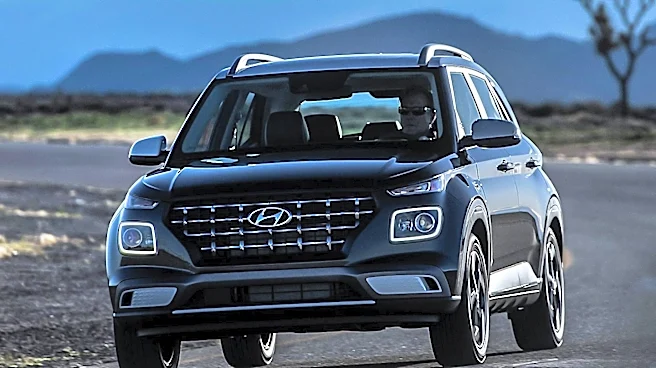
Hyundai Motor Group's California proving ground in the Mojave Desert has accumulated over 22 million miles (approximately 35.4 million kilometers) of testing since its establishment in 2005. This extensive testing, involving about 5,000 Hyundai, Kia,
and Genesis vehicles, is directly linked to the automaker surpassing 30 million vehicle sales in the United States. The 4,400-acre facility conducts 14 core test procedures, including a high-speed oval, a ride and noise track, an off-road course, and a desert driving loop, to assess safety, durability, and suitability for North American road conditions. For instance, a new model typically covers about 30,000 miles on the high-speed oval over three months. The durability track is designed to simulate 100,000 kilometers of ordinary driving in just 10,000 kilometers, under conditions ten times more severe than real-world roads. This rigorous testing is crucial as the company expands its electric vehicle (EV) lineup in North America, allowing them to test batteries, thermal systems, and driver-assistance sensors in extreme desert conditions that lab simulations cannot fully replicate. Cumulative deliveries of electrified models in the U.S. have already exceeded 2 million by August.
Why It's Important?
The extensive testing at Hyundai Motor Group's California proving ground is a critical factor in the company's enhanced quality reputation and significant sales growth in the U.S. market. By rigorously testing vehicles in extreme conditions, Hyundai aims to ensure durability and reliability, addressing past perceptions of its vehicles. This commitment to quality has translated into global recognition, with the group receiving 15 top honors across major car awards worldwide, including World Car of the Year, North American Car of the Year, and European Car of the Year. For U.S. consumers, this means a higher standard of vehicle quality and performance, particularly as the market shifts towards electric vehicles. The focus on testing EV components like batteries and thermal systems in real-world extreme temperatures directly impacts the reliability and safety of these advanced vehicles. For the automotive industry, Hyundai's strategy highlights the importance of comprehensive, real-world testing in building consumer trust and achieving market success, especially in competitive segments like EVs and luxury vehicles.
What's Next?
Hyundai Motor Group is expected to continue leveraging its California proving ground to validate and refine its expanding lineup, particularly focusing on next-generation technologies. This includes further testing of electric vehicle batteries and motors for adequate cooling in high temperatures, and ensuring the accuracy of autonomous-driving sensors and advanced driver assistance systems. The ongoing development and testing of high-performance models, such as the Genesis GV60 Magma and Hyundai's Ioniq 5 N and Ioniq 6 N, will also continue to confirm their performance capabilities. The company's sustained investment in rigorous testing facilities underscores its commitment to maintaining and improving vehicle quality and reliability, which will be crucial for its continued growth and competitiveness in the U.S. and global automotive markets, especially as it introduces new electrified and technologically advanced models.
Beyond the Headlines
The evolution of Hyundai Motor Group's testing strategy, particularly the establishment and utilization of its California proving ground, reflects a broader industry trend towards more stringent and comprehensive vehicle validation. This move away from solely lab-based simulations to real-world extreme condition testing highlights a recognition that consumer expectations for vehicle performance, especially in emerging technologies like EVs and autonomous driving, demand a higher level of assurance. The company's journey from being perceived as a 'cheap Korean car' manufacturer to a globally recognized brand for quality and innovation demonstrates the profound impact of strategic investment in research, development, and rigorous testing. This shift not only benefits Hyundai by boosting its market share and brand image but also raises the bar for quality standards across the entire automotive industry, ultimately leading to safer and more reliable vehicles for consumers.