






What's Happening?
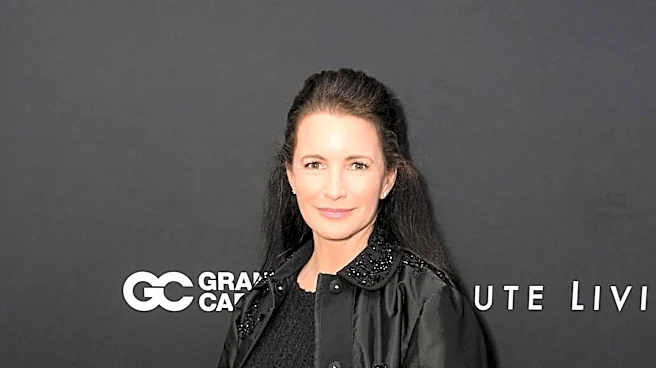
Actress Kristin Davis, known for her role as Charlotte York in 'Sex and the City,' has revealed the extent of body shaming she experienced from fans during the show's original run. During a reunion with co-star Evan Handler on her podcast 'Are You a Charlotte?',
Davis shared that numerous fans would approach her and Handler, commenting that she looked 'so much fatter on the show' than in person. Davis also discussed her unhealthy eating habits during earlier seasons, including a period where she subsisted primarily on M&Ms, leading to visible rib definition and a lack of proper nutrition. She explained that she adopted this diet, mistakenly believing ballet dancers survived on cigarettes and candy bars. Additionally, Davis noted that costume designer Patricia Field struggled with her curvier figure during a fashion era that favored straight silhouettes, which further contributed to her body image struggles.
Why It's Important?
Kristin Davis's revelations highlight the pervasive issue of body shaming faced by public figures, particularly women in the entertainment industry. Her experience underscores the intense scrutiny actors endure and the damaging impact of unsolicited comments on their physical appearance. This situation sheds light on the unrealistic beauty standards often perpetuated by media and society, which can lead individuals, even those in the public eye, to adopt unhealthy coping mechanisms like extreme dieting. The comments from fans, as recalled by Davis and Handler, demonstrate a lack of empathy and boundaries, revealing a broader societal problem where public figures are often dehumanized and subjected to harsh criticism. This discussion contributes to the ongoing conversation about mental health, body positivity, and the need for greater respect and understanding in public discourse surrounding appearance.
What's Next?
Davis's candid discussion is part of a growing trend among celebrities to openly address the pressures and negative experiences associated with fame, particularly concerning body image. This transparency may encourage more public figures to share their stories, further destigmatizing conversations around body shaming and mental health in Hollywood. For fans and the public, such disclosures can foster greater awareness and empathy, potentially leading to a more considerate approach when interacting with or discussing public figures. The ongoing dialogue could also influence how media portrays body types and how costume designers approach styling diverse figures, moving towards more inclusive and realistic representations. Ultimately, these conversations contribute to a broader cultural shift towards body acceptance and away from harmful judgmental attitudes.
Beyond the Headlines
The deeper implications of Kristin Davis's experience touch upon the objectification of women in media and the historical pressures placed on female actors to conform to specific aesthetic ideals. Her struggle with costume design due to her natural curves during a period favoring 'straight' figures illustrates how industry standards can inadvertently contribute to body image issues. This situation also reflects the broader societal tendency to conflate a person's worth or talent with their physical appearance, particularly for women. The public's sense of entitlement to comment on a celebrity's body reveals a problematic aspect of fan culture, where the line between admiration and intrusive criticism becomes blurred. Davis's story serves as a poignant reminder of the human cost behind the glamour of Hollywood and the enduring need to challenge and dismantle harmful beauty norms that impact individuals both in and out of the spotlight.