





What's Happening?
Portland State University is offering a nine-day, non-credit-bearing program titled "Italy: Roma Città dell’Acqua" (Rome: City of Water). Scheduled from September 6–14, 2027, the program aims to explore how water has influenced Rome, Italy, over the past
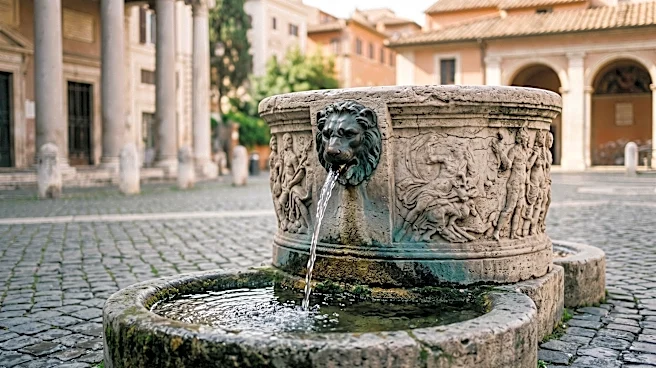
3,000 years. Participants will delve into the city's development by examining ancient aqueducts, baths, and fountains, and understanding water's role in contemporary Roman life. The curriculum includes site visits, walking lectures led by archaeologists, and an exploration of Rome’s modern beach scene. Potential sites for visits include the Forum Boarium, Isola Tiberina, Baths of Caracalla, Villa d’Este, Castel Gandolfo, and Santa Severa. This program is designed for a diverse audience, including senior auditors, PSU faculty and staff, and community members, particularly those interested in history, art, cultural studies, and the humanities.
Why It's Important?
This program offers a unique educational opportunity for U.S. citizens and residents to engage with Italian history and culture through an unconventional lens. By focusing on water, the program provides a distinct perspective on urban development, engineering, and societal evolution, which can enrich participants' understanding of historical and cultural dynamics. For Portland State University, offering such international non-credit programs can enhance its global engagement and provide valuable learning experiences outside traditional academic structures. It also caters to a growing interest in experiential learning and cultural tourism among various demographics, including retirees and lifelong learners, contributing to cross-cultural understanding and personal enrichment.
What's Next?
The program is scheduled for September 6–14, 2027. Interested individuals can view program details through Portland State University. The university will likely continue to promote this and similar non-credit international travel programs to attract participants from its faculty, staff, and the broader community. The success of this program could lead to the development of more specialized non-credit offerings, further expanding educational travel opportunities for U.S. learners interested in global history and culture.
Beyond the Headlines
The focus on water as a central theme for exploring Rome highlights the profound and often overlooked impact of natural resources on urban planning, societal structure, and cultural identity throughout history. This approach encourages participants to think critically about the interconnectedness of environment, technology, and human civilization. It also underscores the value of interdisciplinary studies, combining elements of archaeology, art history, and environmental studies. Such programs can foster a deeper appreciation for global heritage and the complex factors that shape cities, offering insights that extend beyond mere tourism to a more profound educational experience.