






What's Happening?
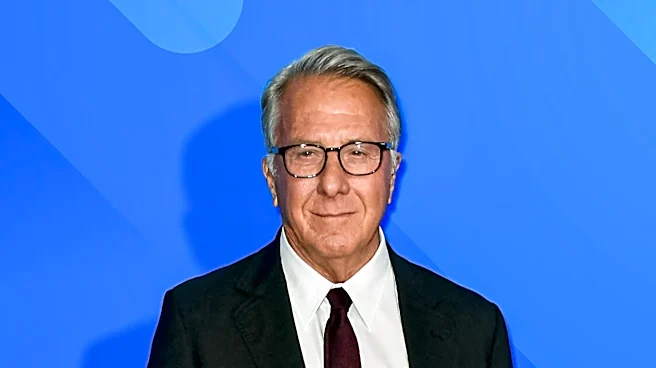
Veteran actor Dustin Hoffman has released his new memoir, 'Look at Me,' co-written with New Yorker staff writer Ariel Levy. The book offers an in-depth look at Hoffman's life, from his challenging upbringing in Los Angeles, where he was bullied and felt
like a 'failure,' to his rise as a two-time Oscar winner. Hoffman recounts his early struggles as an actor in New York with Gene Hackman and Robert Duvall, working odd jobs before his breakthrough role as Benjamin Braddock in 'The Graduate' at age 30. The memoir also shares anecdotes from his film career, including interactions with co-stars like Steve McQueen and Laurence Olivier, and his experiences playing a woman in 'Tootsie.' Hoffman describes the transformation for 'Tootsie' as 'demoralizing' and reveals that his famous line in 'Midnight Cowboy,' 'I’m walkin’ here!', was improvised. The book also touches upon his personal life, including his marriages and children, and his encounter with a young Eddie Vedder, which Hoffman believes inspired Vedder's artistic confidence.
Why It's Important?
Dustin Hoffman's memoir is significant for its contribution to the cultural record of Hollywood and American cinema. As an actor whose career spans over half a century and includes roles in films that defined generations, his perspective offers valuable insights into the evolution of the film industry and the craft of acting. The book provides a personal account of the challenges and triumphs of a prominent figure, potentially inspiring aspiring artists and offering fans a deeper understanding of the man behind iconic characters. The memoir also joins a trend of recent autobiographies from other veteran actors, highlighting a period of reflection among long-standing figures in entertainment. His recounting of interactions with other legendary actors and behind-the-scenes details of classic films enriches the historical narrative of American cinema, providing context for how some of the most memorable moments in film were created.
What's Next?
The release of Dustin Hoffman's memoir is likely to generate considerable discussion and media attention, particularly within literary and entertainment circles. Readers and critics will analyze his reflections on his career, personal struggles, and interactions with other Hollywood figures. The book's candid nature, including his brief mention of the #MeToo allegations, may spark further conversations about accountability and historical perspectives within the industry. Given the trend of memoirs from other established actors, Hoffman's book could also contribute to a broader re-evaluation of the careers and legacies of his contemporaries. The memoir's content may also lead to renewed interest in his filmography, prompting retrospectives or discussions about his most impactful roles and performances.
Beyond the Headlines
Beyond the immediate narratives of Dustin Hoffman's career, his memoir touches upon deeper themes of self-perception, the pursuit of artistic dreams, and the impact of early life experiences on adult identity. Hoffman's recurring belief that he was destined for 'failure' despite immense success highlights the psychological complexities that can accompany fame and achievement. The book also implicitly explores the changing landscape of Hollywood, from the improvisational nature of classic scenes to the challenges actors face in navigating public scrutiny. His brief address of the #MeToo movement, where he compares himself to a McCarthy-era victim and denies accusations, reflects a broader societal tension regarding historical accountability and differing perspectives on past events. This aspect of the memoir could prompt discussions about how public figures address controversial topics in their personal narratives and the ongoing dialogue surrounding such issues in contemporary culture.