






What's Happening?
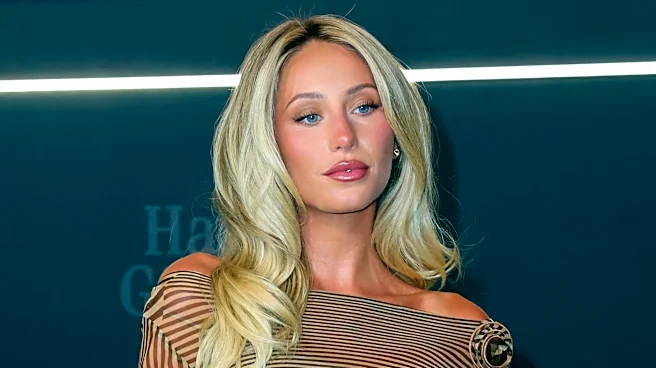
Influencer Alix Earle has publicly addressed her contentious professional relationship with Alex Cooper, founder of the Unwell Network, in her new Netflix reality show, 'Earle Meets World.' Earle claims that her 'Hot Mess' podcast, produced by Unwell,
was mismanaged and that she felt 'taken advantage of, used, mistreated, and manipulated' by Cooper. She revealed that she learned of her departure from Unwell through the media in 2025 and expressed fear of Cooper's potential reactions. Earle recounted an incident during a 'Call Her Daddy' podcast appearance where she felt uncomfortable with sexual questions asked while she was drinking. In the show, Earle drafted a text message to Cooper, accusing her of false promises, being manipulative and toxic, and threatening her. It remains unclear if the text was sent.
Why It's Important?
This public dispute between two prominent social media figures highlights significant issues within the influencer industry, particularly concerning professional conduct, contractual agreements, and the power dynamics between established figures and rising stars. Earle's allegations of mismanagement and manipulation raise concerns about the ethical responsibilities of talent networks and the protection of creators, especially younger, impressionable individuals. The situation could prompt greater scrutiny of influencer contracts and the support systems provided by networks. For aspiring influencers, it serves as a cautionary tale about the complexities of business partnerships in the digital space. The public nature of the conflict also underscores the blurred lines between personal and professional lives in the influencer economy, where disputes often play out in the public eye, impacting reputations and careers.
What's Next?
The airing of Alix Earle's allegations on 'Earle Meets World' is likely to intensify the public feud between her and Alex Cooper. Cooper may choose to respond to the claims, either directly or through her own platforms, potentially escalating the conflict. This situation could lead to further discussions within the influencer community about best practices for talent management and the need for transparency and fairness in business dealings. Other influencers might come forward with similar experiences, or the industry might see a push for more standardized contracts and clearer ethical guidelines. The outcome could influence how emerging influencers approach partnerships with established networks, potentially leading them to seek more independent routes or demand greater protections in their agreements. The public's perception of both Earle and Cooper will also be shaped by how this dispute unfolds.
Beyond the Headlines
This conflict delves into the deeper ethical and psychological dimensions of the influencer industry. Earle's account of feeling 'scared' and 'manipulated' by Cooper points to potential power imbalances and the vulnerability of individuals navigating rapid fame. The use of reality television to air grievances also blurs the lines between personal therapy and public spectacle, raising questions about the authenticity and motivations behind such disclosures. Furthermore, the incident during the 'Truth or Drink' segment on 'Call Her Daddy' highlights concerns about consent and exploitation, particularly when alcohol is involved and sensitive questions are posed to younger individuals. This case could spark broader conversations about the mental health impact of public disputes, the pressures of maintaining a public persona, and the ethical responsibilities of content creators and network executives in fostering a safe and respectful professional environment.