



What's Happening?
CVS Health announced its intention to separate into two distinct, publicly traded companies, a move that will unwind its integrated healthcare strategy. This split is anticipated to finalize in the first half of 2028. One entity, a healthcare solutions
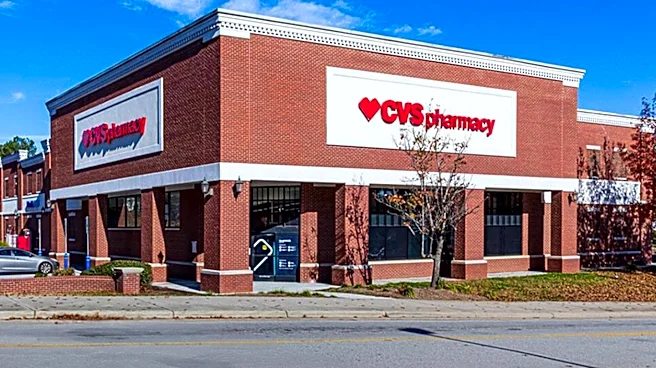
business, will encompass Aetna, CVS Caremark, CVS Specialty, Oak Street Health, and Signify Health. The other, CVS Pharmacy, will manage approximately 9,000 CVS pharmacies, its mail pharmacy operations, MinuteClinic (including virtual care), and the Health100 technology services business. Current CVS Health shareholders are expected to receive shares in both new companies. David Joyner, the current Chairman and CEO of CVS Health, is slated to lead the healthcare solutions company, while Prem Shah, a CVS Health group president, will become CEO of CVS Pharmacy. The company aims for the separation to be tax-free for U.S. federal income tax purposes for both CVS Health and its shareholders.
Why It's Important?
This strategic separation by CVS Health marks a significant shift in the U.S. healthcare landscape, potentially influencing other integrated healthcare giants like UnitedHealth and Cigna. The decision comes amid increasing political scrutiny and challenges faced by companies that combine insurance, pharmacy benefit management, and retail pharmacies. By splitting, CVS aims to allow each new company to pursue more focused strategic agendas, fostering greater innovation, technology adoption, and efficiency. This could lead to more specialized services and potentially better outcomes in each sector. For consumers, this might translate into clearer distinctions between their pharmacy services and their insurance/healthcare providers. Investors will be watching closely to see if the focused approach leads to enhanced shareholder value, as the company reported strong third-quarter 2026 revenues of $108.4 billion and raised its full-year earnings guidance despite the impending breakup.
What's Next?
The separation is expected to be completed in the first half of 2028, subject to customary conditions. In the interim, CVS Health will continue its operations as a single entity. The leadership for both new companies has been identified, with David Joyner leading the healthcare solutions business and Prem Shah heading CVS Pharmacy. Shareholders will eventually own stakes in both independent companies. The market will be observing how this split impacts the competitive landscape, particularly for other large healthcare conglomerates that have adopted similar integrated models. The company's stated intention for the separation to be tax-free for U.S. federal income tax purposes will also be a key factor for investors and financial analysts as the process unfolds.
Beyond the Headlines
The decision by CVS Health to dismantle its integrated model, which was built through decades of acquisitions, reflects a broader re-evaluation within the U.S. healthcare industry. The initial strategy of combining insurance, pharmacy, and healthcare services was intended to curb rising medical costs, but the current political and competitive environment appears to favor specialization. This move could signal a trend where the complexities and regulatory pressures of managing diverse healthcare segments under one roof outweigh the benefits of integration. It also highlights the evolving nature of healthcare delivery and financing, where companies are constantly adapting to policy changes, consumer demands, and technological advancements. The success or challenges faced by the two new entities post-split could provide valuable lessons for the future direction of large-scale healthcare enterprises in the U.S.