







What's Happening?
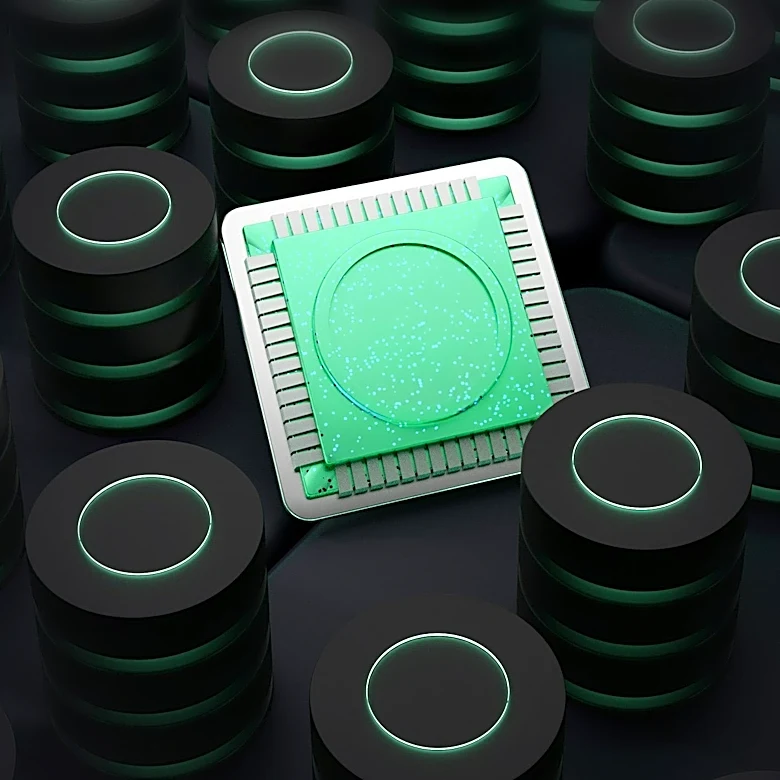
Micron Technology, a leading memory chipmaker, has reported a significant increase in its gross margin, reaching 84.9% in its latest quarter. This marks a substantial rise from 74.9% in the previous period and 39% a year earlier. The company's shares
surged by 15% following this announcement. Micron's performance has outpaced major U.S. tech companies, including Meta and Nvidia, whose latest gross margins were 81.9% and 75%, respectively. The surge in demand for high-bandwidth memory, driven by the ongoing AI infrastructure buildout, has been a key factor in Micron's profitability. Additionally, Qualcomm also experienced a 15% increase in its shares after raising its non-handset revenue forecast for fiscal 2029 to $40 billion, nearly doubling its previous projection. Qualcomm is making significant strides in data centers with its new Dragonfly C1000 processor, which is designed for AI applications and emphasizes energy efficiency.
Why It's Important?
Micron's achievement in surpassing Nvidia and Meta in profit margins highlights the growing importance of memory chips in the AI sector. As AI infrastructure continues to expand, the demand for high-performance memory solutions is expected to rise, positioning Micron as a key player in this market. This development underscores the shifting dynamics within the tech industry, where traditional leaders like Nvidia are being challenged by companies that can capitalize on emerging trends. For investors, Micron's performance signals a lucrative opportunity in the memory chip sector, which is becoming increasingly critical to AI advancements. Qualcomm's aggressive push into data centers further illustrates the industry's pivot towards AI-driven technologies, which could reshape the competitive landscape and drive innovation in data processing and energy efficiency.
What's Next?
As Micron continues to benefit from the AI infrastructure boom, it is likely to maintain its focus on enhancing its memory solutions to meet the growing demand. The company's ability to sustain its high profit margins will depend on its capacity to innovate and adapt to the evolving needs of AI applications. Qualcomm's introduction of the Dragonfly C1000 processor suggests a strategic move to capture a larger share of the data center market, which could lead to increased competition among tech giants. The success of these initiatives will be closely watched by industry stakeholders, as they could influence future investments and technological developments in the AI sector.