



What's Happening?
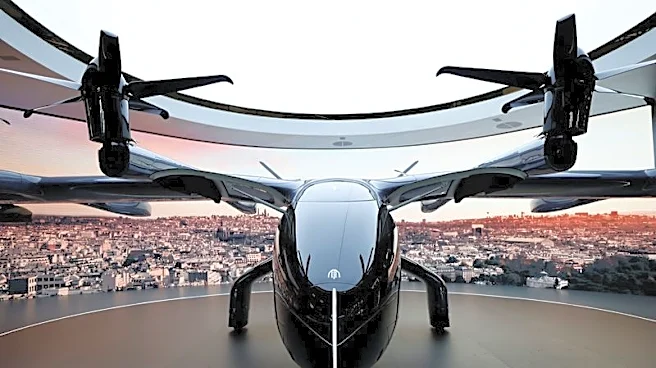
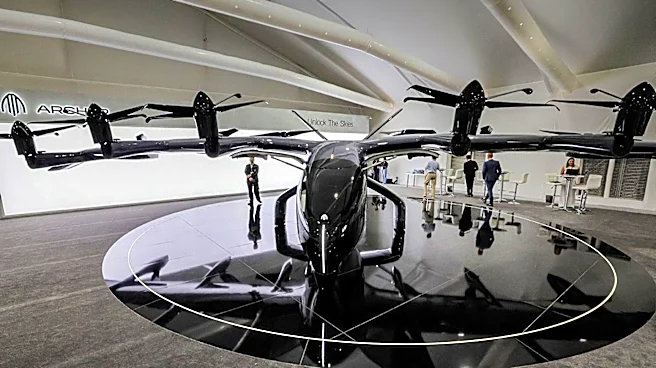
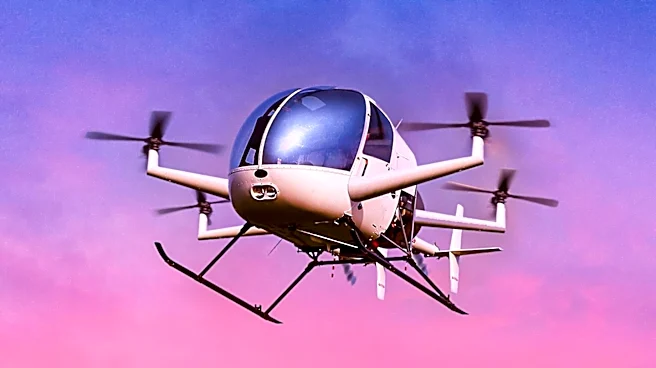
Archer Aviation has introduced a new autonomous aircraft named 'Halo', developed in collaboration with Anduril. This aircraft is designed for commercial use and does not require a pilot. It shares its machinery with 'Thunder', a defense aircraft unveiled
by Anduril. Both aircraft feature a hybrid-electric powertrain and large tilt rotors for vertical takeoff and forward flight. The unveiling marks a significant development for Archer, although its stock saw a slight decline. The company is working towards FAA certification for its flagship eVTOL aircraft, 'Midnight', which is still undergoing testing. The introduction of Halo aims to address commercial needs for autonomous cargo and logistics missions, potentially generating revenue for Archer.
Why It's Important?
The launch of Halo represents a strategic move for Archer Aviation to diversify its offerings and tap into the growing demand for autonomous logistics solutions. This development could position Archer as a key player in the emerging market for autonomous aircraft, which has applications in various sectors such as healthcare, disaster relief, and industrial logistics. The success of Halo could help Archer overcome its financial challenges by opening new revenue streams. However, the company still faces hurdles, including the need for regulatory approvals and the completion of its existing projects. The partnership with Anduril also highlights the increasing collaboration between tech companies and defense contractors in the aerospace industry.
What's Next?
Archer Aviation will continue to pursue FAA certification for its eVTOL aircraft, 'Midnight', while also focusing on the commercial deployment of Halo. The company has named Marubeni Aerospace as Halo's strategic launch partner, but no firm orders have been disclosed yet. The path to commercial viability for Halo will involve navigating regulatory processes and demonstrating the aircraft's capabilities in real-world scenarios. Archer's ability to secure contracts and partnerships will be crucial in establishing its presence in the autonomous aircraft market. The company will also need to manage its financial resources carefully to sustain its operations and achieve its long-term goals.