







What's Happening?
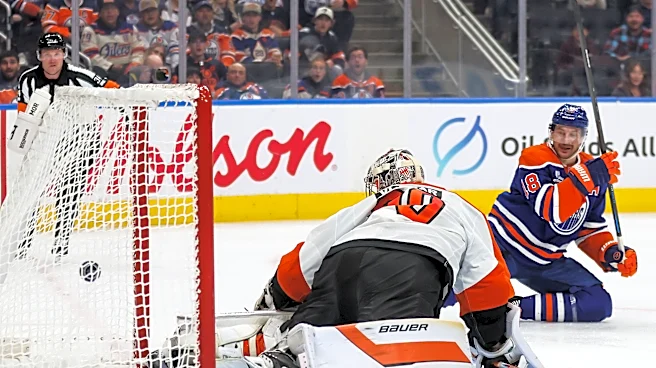
The Philadelphia Flyers have significantly increased forward Matvei Michkov's playing time, with him logging a team-high 20 minutes and 44 seconds among forwards in a recent game against the Edmonton Oilers. This marks a notable jump from his previous
ice time, which was around 15-16 minutes per game. The change comes amidst recent reports, initially from ESPN hockey analyst Kevin Weekes, suggesting that Michkov might prefer a fresh start away from Philadelphia due to the team's disappointing record and internal issues. However, the Flyers organization, including General Manager Daniel Briere and Head Coach Rick Tocchet, has strongly denied these trade rumors. Briere stated he spoke with Michkov and his representative, who both denied the report's substance, and affirmed that trading Michkov is not part of the team's plans. Michkov himself has also publicly expressed happiness in Philadelphia and a focus on playing hockey.
Why It's Important?
This development is important for the Philadelphia Flyers as it directly addresses the ongoing scrutiny surrounding one of their most promising young players. Michkov, a No. 7 pick in the 2023 NHL draft, is considered a central part of the team's long-term strategy. His increased ice time could be an attempt to quell trade rumors and demonstrate the organization's commitment to his development, potentially stabilizing team morale and fan perception. For the Flyers, who are currently struggling with a 5-10-6 record, retaining and developing key young talent like Michkov is crucial for future competitiveness. The controversy and the team's response highlight the pressures faced by NHL franchises in managing player expectations, media speculation, and on-ice performance, especially when a highly-touted prospect is involved.
What's Next?
The immediate next steps will likely involve continued monitoring of Michkov's ice time and performance to see if this increased role becomes a consistent trend. The Flyers' management will also need to maintain open communication with Michkov and his representatives to ensure his satisfaction within the organization, especially as he approaches restricted free agency. If the team's performance does not improve, further trade speculation, potentially involving other veteran players, could resurface. The Flyers' ability to integrate Michkov effectively and improve their overall record will be key in determining the long-term impact of this situation on the team's trajectory and its standing in the league.
Beyond the Headlines
Beyond the immediate impact on the Flyers' roster and performance, this situation touches on broader themes within professional sports regarding player agency and team control. The initial reports of Michkov's desire for a 'fresh start' underscore the evolving dynamics where young athletes, even under contract, can influence their future through various channels, including media leaks. The organization's swift and public denial, coupled with a tangible change in playing time, illustrates the delicate balance teams must strike between managing internal team dynamics and controlling external narratives. This incident could also serve as a case study for other NHL teams in how to handle similar situations involving high-value prospects and the intense media scrutiny that accompanies them.