
What's Happening?
Heytea, a prominent new-style tea brand, has launched its first-ever Matcha Lab on Ludlow Street in New York City's Lower East Side. This new establishment is dedicated exclusively to exploring the possibilities
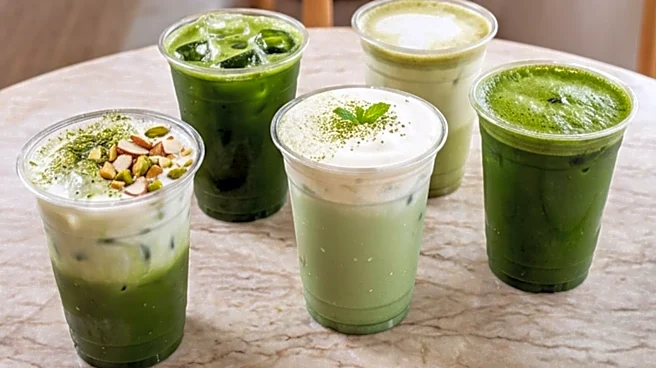
of matcha, offering a menu devoid of coffee, ube, or other categories. The Matcha Lab aims to blend traditional tea craft with experimental approaches, featuring ceremonial-grade single-origin matcha from Jingshan, China, and Shizuoka, Japan, prepared at various intensity levels. The menu also includes unique matcha creations such as Matcha Dirty (without espresso), Pistachio Matcha Dirty, Matcha Latte Float with matcha gelato, and Frozen Yuzu Matcha. The interior design of the lab reflects a tension between tradition and experimentation, incorporating exposed brick, matcha powder-coated elements, pale wood furniture, and stainless-steel accents, alongside antique tea tools and educational displays. This marks Heytea's fourth specialized concept in New York, following its lab in Times Square, teabar on the Upper East Side, and gelato lab+ in Union Square.
Why It's Important?
The opening of Heytea's Matcha Lab signifies a growing trend in the U.S. beverage market towards specialized, single-ingredient focused establishments and premium tea experiences. This move by Heytea, a global brand, indicates a belief in the sustained and evolving demand for matcha beyond its current ubiquity as a flavor or wellness cue. For consumers, it offers a deeper exploration of matcha's versatility and origins, potentially elevating their appreciation for the ingredient. For the food and beverage industry, it sets a precedent for niche concept stores that prioritize depth and experimentation over broad menus. This could inspire other brands to invest in similar specialized ventures, fostering innovation and competition within the premium tea and health-conscious beverage sectors. The focus on ceremonial-grade matcha and unique preparations also caters to a more discerning clientele, potentially expanding the market for high-quality tea products in the U.S.
What's Next?
The success of Heytea's Matcha Lab could influence future expansion strategies for the brand and other tea companies in the U.S. If the concept proves popular, Heytea might consider opening similar specialized matcha labs in other major American cities, further solidifying its presence and market share. Competitors in the beverage industry may observe the performance of this dedicated matcha concept and potentially adapt their own offerings or develop similar niche establishments. This could lead to an increased availability of diverse matcha products and experiences across the country. Furthermore, the emphasis on educational elements within the lab, such as the antique stone mill and notes on matcha origins, suggests a potential for increased consumer education and engagement around tea culture, which could drive broader interest in traditional and artisanal tea practices in the U.S. market.
Beyond the Headlines
The establishment of a dedicated Matcha Lab by Heytea reflects a broader cultural shift in the U.S. towards mindful consumption and an appreciation for artisanal products. Matcha, with its historical roots in East Asian traditions, is being recontextualized in a modern, experimental setting, bridging cultural gaps and introducing ancient practices to new audiences. This trend extends beyond beverages, touching upon a desire for authenticity, quality, and unique experiences in everyday consumption. The lab's design, which deliberately juxtaposes traditional and industrial elements, mirrors a contemporary aesthetic that values both heritage and innovation. This approach could influence retail design and branding strategies across various sectors, as businesses seek to create immersive and educational environments that resonate with consumers looking for more than just a product, but an experience and a story. It also highlights the ongoing globalization of culinary trends, where specific ingredients become platforms for creative exploration and cultural exchange.