







What's Happening?
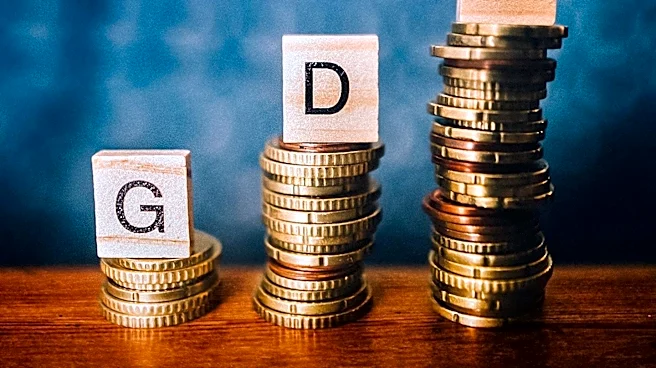
The U.S. economy experienced significant growth in the third quarter of 2026, with its Gross Domestic Product (GDP) expanding at an annualized rate of 3.4%. This marks an increase from the 2.2% growth observed in the second quarter, according to data
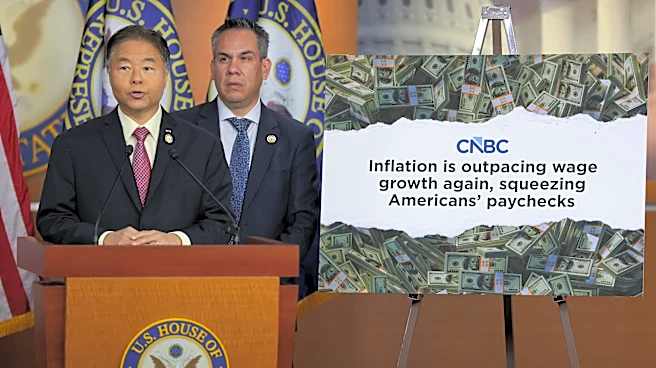
released by the Bureau of Economic Analysis (BEA). This economic expansion was primarily fueled by increased business investment, robust consumer spending, and higher government expenditures. However, this growth was partially offset by a decline in exports. Concurrently, inflation remained elevated, with the September Personal Consumption Expenditures (PCE) inflation reaching 3.6% year-over-year, up from 3.4% in August, and core PCE inflation standing at 3.1%. In response to these economic indicators, the Federal Reserve maintained its benchmark interest rate at 3.75% to 4.00% at its October meeting, following a quarter-point increase in September. The Federal Open Market Committee (FOMC) acknowledged the strong pace of economic activity but also noted persistent uncertainty and elevated inflation.
Why It's Important?
The robust economic growth and persistent inflation have significant implications for U.S. monetary policy and financial markets. The stronger-than-expected GDP growth reinforces the Federal Reserve's cautious stance, suggesting that restrictive monetary policies may continue to be necessary to curb inflation. This outlook has already begun to reprice market expectations, particularly affecting assets like gold. While gold typically benefits from economic uncertainty and lower interest rates, the current environment of strong growth and potential for sustained higher rates puts downward pressure on its price. Investors may shift towards interest-bearing assets, such as government bonds, which become more attractive in a higher-rate environment. For businesses, continued economic expansion could signal sustained consumer demand, but the elevated inflation and potential for prolonged higher interest rates could increase borrowing costs and operational expenses, impacting profitability and investment decisions across various sectors.
What's Next?
Looking ahead, the Federal Reserve will closely monitor incoming economic data, including inflation figures and employment reports, to guide its future monetary policy decisions. The sustained economic growth and elevated inflation could lead to continued discussions within the FOMC regarding the appropriate level of interest rates, with some members potentially advocating for further rate hikes if inflation remains stubbornly high. Financial markets will likely continue to adjust to the Federal Reserve's hawkish stance, potentially leading to further volatility in asset prices, particularly for commodities like gold and interest-rate-sensitive sectors. Businesses and consumers should anticipate a continued environment of higher interest rates, which could influence borrowing costs for mortgages, loans, and corporate investments. The interplay between economic growth and inflation will be a critical factor shaping the U.S. economic landscape in the coming quarters.
Beyond the Headlines
The current economic scenario highlights a complex challenge for policymakers: balancing robust economic growth with persistent inflationary pressures. While strong GDP growth is generally positive, if accompanied by high inflation, it can erode purchasing power and create economic instability. The Federal Reserve's strategy of maintaining restrictive policies aims to achieve a 'soft landing,' where inflation is brought under control without triggering a recession. However, this path is fraught with risks, as overtightening could stifle growth, while undertightening could allow inflation to become entrenched. This situation also underscores the global interconnectedness of economies, as U.S. monetary policy decisions can have ripple effects on international markets and trade. The long-term implications could include a re-evaluation of global supply chains to mitigate inflationary pressures and a shift in investment strategies towards sectors more resilient to higher interest rates and inflation.