






What's Happening?
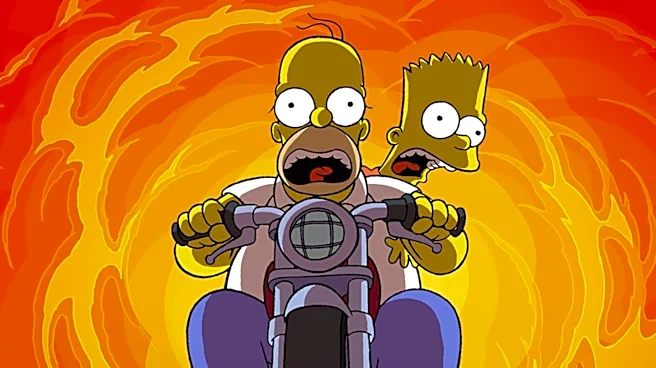
An episode of 'The Simpsons' titled 'It’s a Blunderlife Life,' released in 2023, has fueled online speculation about a potential 'Great Blackout' occurring on November 17. The episode depicts a future version of Lisa Simpson recounting a Thanksgiving
tradition of lighting 'Remembrance candles' for a blackout that nearly destroyed Springfield. A diary entry shown in the episode, marked November 17, reads 'A storm approaching,' leading to a six-day power outage in Springfield, initially blamed on Homer but later revealed to be Mr. Burns. Fans have noted the show's history of seemingly predicting real-life events, including President Trump's election and Lady Gaga's Super Bowl performance. This has led some to believe the November 17 date could signify a real-world blackout. However, the episode does not specify the year of the blackout, and the timeline for Thanksgiving in the episode does not align with the current year's calendar. Furthermore, the blackout depicted is limited to Springfield, not a global event, and there is no official confirmation or reliable information suggesting an impending worldwide power outage.
Why It's Important?
The viral spread of this theory highlights the significant cultural impact and perceived predictive power of 'The Simpsons,' demonstrating how fictional narratives can influence public perception and generate widespread concern, even without concrete evidence. The show's long-standing reputation for uncanny predictions contributes to the credibility some viewers assign to such theories, leading to discussions and anxieties online. This phenomenon also underscores the broader issue of misinformation and how easily speculative content can gain traction, especially when tapping into existing anxieties about infrastructure vulnerabilities or societal disruptions. The discussion around a potential blackout, even if unfounded, can prompt individuals to consider emergency preparedness, reflecting a general public awareness of potential vulnerabilities in power grids and technological systems.
What's Next?
While there is no official indication of a global blackout, the online discussion surrounding 'The Simpsons' prediction may continue to circulate, particularly on social media platforms. The lack of a specific year in the episode's depiction allows for ongoing speculation each November 17. The situation may also prompt further media analysis of 'The Simpsons' predictive track record and the psychological aspects of why such theories resonate with the public. For the general public, it serves as a reminder to verify information from official sources rather than relying solely on fictional portrayals or viral social media content. The ongoing conversation could also inadvertently raise awareness about the importance of emergency preparedness for potential, albeit unpredicted, power outages.
Beyond the Headlines
This incident delves into the fascinating intersection of popular culture, collective belief, and the spread of information in the digital age. 'The Simpsons' has become a cultural touchstone, and its perceived ability to predict future events has evolved into a form of modern folklore. This phenomenon reflects a human tendency to seek patterns and meaning, even in fictional narratives, especially when facing uncertainties about the future. The ease with which a fictional plot point can be misinterpreted as a prophecy highlights the challenges of media literacy and critical thinking in an era of rapid information dissemination. It also touches upon the broader societal anxieties regarding technological fragility and potential systemic failures, where a fictional blackout can tap into real-world concerns about infrastructure resilience and preparedness for 'black sky' events.