

What's Happening?
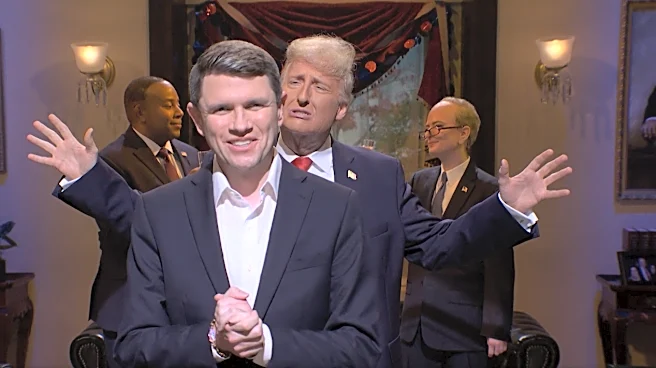
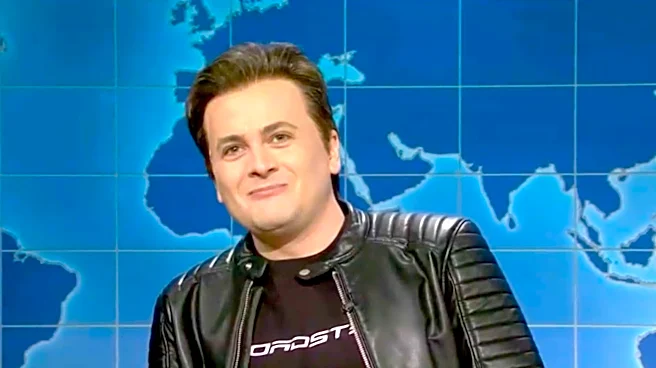
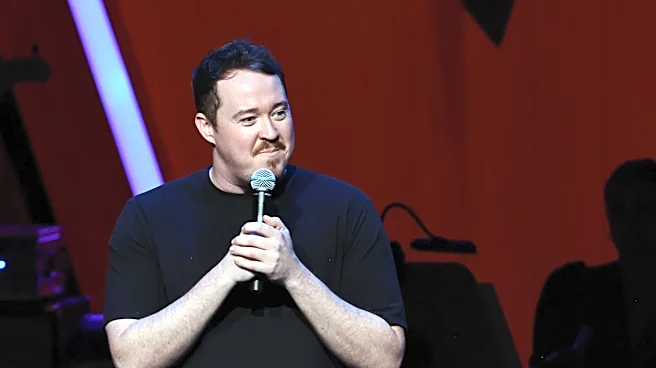
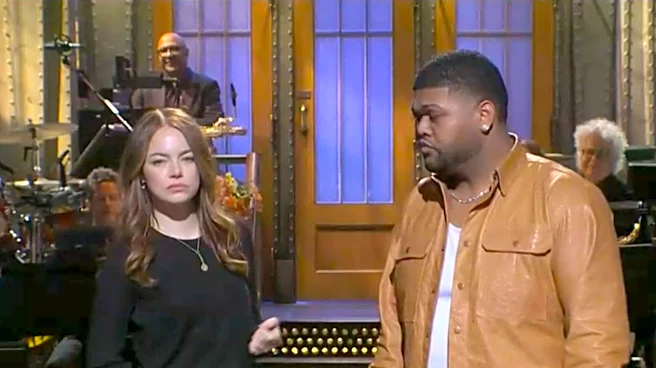
Comedian Shane Gillis hosted 'Saturday Night Live' on October 10, an appearance that has reignited discussions about appropriate content in late-night comedy. During his monologue, Gillis made a crude remark about women's clothing and later used an audible
expletive in a sketch. These incidents quickly circulated online, drawing significant criticism from viewers who felt the comments crossed acceptable boundaries for network television. The controversy is amplified by Gillis's past; he was previously dismissed from SNL's cast in 2019 after prior controversial remarks surfaced. This history has intensified scrutiny on NBC and SNL producers for their decision to invite him back as a host. As of now, neither NBC nor SNL producers have issued a public statement regarding the backlash, leaving many to question the network's stance on the matter.
Why It's Important?
This incident is significant as it touches upon broader conversations regarding the evolving standards in late-night comedy and how established shows manage guests with controversial pasts. For viewers, it raises questions about the future booking and editorial choices of SNL and similar programs. For NBC, the stakes involve maintaining audience trust and potentially facing renewed scrutiny from critics, talent, and advertisers. Industry observers note that such controversies can influence advertiser sentiment and viewer perception, even if short-term ratings remain stable. Networks often navigate a delicate balance between creative freedom, comedic risk, and public response, and this event highlights the challenges in defining those boundaries in contemporary media. The lack of an immediate response from NBC or SNL producers further complicates the situation, leaving the public to speculate on the network's internal standards and future direction.
What's Next?
The immediate aftermath of Shane Gillis's controversial SNL hosting performance will likely focus on how NBC and SNL producers choose to address the public outcry. Their next broadcast presents a critical opportunity to either de-escalate tensions or potentially exacerbate them. Future actions could include a public statement, adjustments in casting decisions, or changes in editorial framing for upcoming episodes. The response from major stakeholders, including other comedians, advertisers, and civil society groups, will also be crucial. Comedian Dan Levy has already publicly expressed disapproval, amplifying the story beyond fan circles. Depending on NBC's response, there could be further pressure from advocacy groups regarding content standards and representation. The incident may also prompt internal reviews within NBC about guest vetting processes and the balance between artistic expression and network responsibility, potentially influencing how similar situations are handled in the future.
Beyond the Headlines
The controversy surrounding Shane Gillis's SNL appearance delves into deeper implications concerning the cultural landscape of comedy and free speech in mainstream media. It highlights the ongoing tension between a comedian's right to push boundaries and a network's responsibility to its audience and advertisers. Ethically, the incident raises questions about accountability for past controversial statements and whether individuals should be given second chances on prominent platforms. Legally, while freedom of speech is protected, network television operates under different standards than independent platforms, often leading to debates about censorship versus editorial discretion. Culturally, this event reflects a broader societal discussion about what constitutes acceptable humor, particularly concerning gender and other sensitive topics. It could also signal a long-term shift in how networks approach booking talent with contentious histories, potentially leading to more stringent vetting processes or a more cautious approach to controversial comedic styles on mainstream platforms.