


What's Happening?
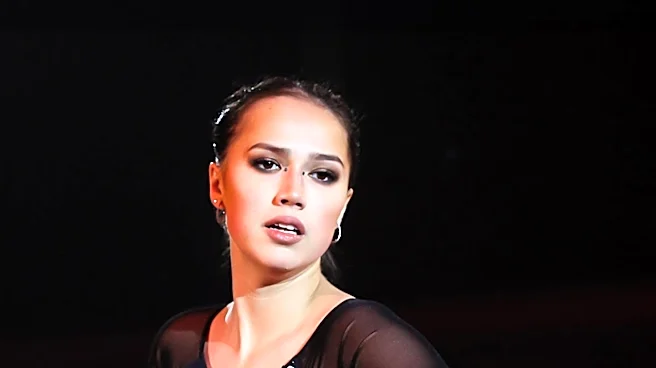
Russian figure skater Kamila Valieva has had her neutral athlete status revoked, preventing her from competing internationally. This decision comes after concerns arose regarding a potential breach of criteria that prohibits skaters from being granted
neutral status if they have previously supported Russia's war in Ukraine. The International Skating Union (ISU) had initially granted Valieva neutral status under a new rule for the current season, which presumes eligibility for Russian and Belarusian skaters unless they fall under disqualifying criteria. However, this status was withdrawn. Mark Kondratiuk, another Russian men’s skater and Valieva's teammate from the 2022 Olympics, has also had his neutral status revoked. The ISU is expected to rule on appeals from both athletes by the middle of next week, after which they can appeal to the Court of Arbitration for Sport.
Why It's Important?
The revocation of Kamila Valieva's neutral athlete status carries significant implications for international sports and the ongoing debate surrounding the participation of Russian and Belarusian athletes. This decision underscores the strict stance taken by international sports federations against any perceived support for the conflict in Ukraine, even as they attempt to create pathways for individual athletes to compete neutrally. For Valieva, who was at the center of a doping scandal during the 2022 Beijing Olympics, this further complicates her career and public image. The case highlights the complex ethical and political considerations that sports bodies must navigate, balancing principles of neutrality and fairness with geopolitical realities. It also sets a precedent for how similar cases involving athletes from Russia and Belarus might be handled in the future, potentially affecting many other competitors.
What's Next?
Kamila Valieva and Mark Kondratiuk are awaiting a ruling from the International Skating Union (ISU) on their appeals regarding the revocation of their neutral athlete status. This decision is expected by the middle of next week. If the ISU upholds the revocation, both athletes will have the option to appeal to the Court of Arbitration for Sport (CAS), which could lead to a prolonged legal battle. The outcome of these appeals will be closely watched as it will further define the eligibility criteria and the appeals process for Russian and Belarusian athletes seeking to compete internationally under neutral banners. The ISU's final decision will also influence how other sports federations approach similar situations.
Beyond the Headlines
This development extends beyond just Valieva's individual case, touching upon the broader ethical dilemma faced by international sports organizations. The ISU's criteria for neutral status, which includes prohibitions against active and public support for the war in Ukraine, reflects a growing demand for athletes to be held accountable for their political stances, especially in times of conflict. This raises questions about the extent to which athletes should be expected to remain apolitical or face consequences for their views. The situation also highlights the ongoing tension between individual athlete rights and collective responsibility, as sports bodies grapple with how to sanction nations without unfairly punishing individual competitors. The outcome of these appeals could shape future policies on athlete eligibility in politically charged environments.