





What's Happening?
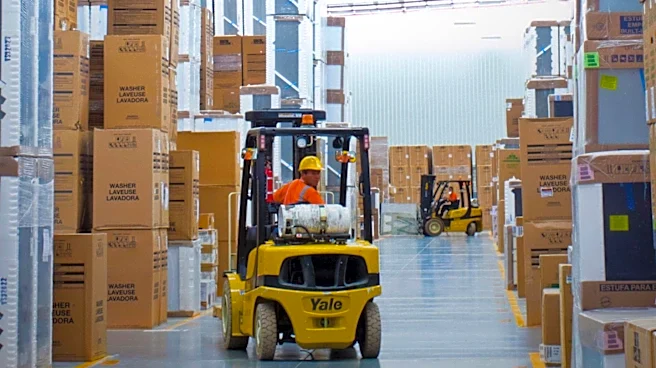
Wegmans Food Markets is investing $110 million in its supply chain network, which includes the addition of a refrigerated perishables facility in Rochester, N.Y., and the closure of its oldest leased distribution center. This move aims to support perishable operations
for produce, meat, seafood, deli, and restaurant foods, and will also involve moving its return center into a modernized building in Rochester. The company states these projects will increase capacity and reduce reliance on third-party providers, ensuring a safer, more efficient, and resilient supply chain. This announcement follows similar investments by other major grocers; Target recently opened a $367 million food distribution center in Thornton, Colo., and ALDI U.S. plans to build three new distribution centers by 2029, along with a chilled center at its Haines City, Fla., site.
Why It's Important?
This significant investment by Wegmans and other grocers highlights a critical trend in the U.S. food industry: the growing demand for fresh food and the necessity for robust cold chain logistics to support it. As consumers increasingly prioritize fresh produce and perishable goods, efficient and reliable refrigerated distribution networks become paramount. These investments ensure product quality, reduce waste, and enhance food safety, directly impacting consumer trust and satisfaction. For the grocery sector, expanding cold chain capacity allows for greater market reach, faster replenishment times, and improved operational efficiency, which are crucial for competitiveness. The shift towards operator-held cold storage, as indicated by federal data, also signifies a strategic move by retailers to gain more control over their supply chains, reducing dependence on external providers and optimizing costs.
What's Next?
Wegmans will proceed with the construction of its new refrigerated facility in Rochester and the consolidation of its Winton Road general merchandise distribution center into its Pottsville, Pa., facility by spring 2027. The company has assured that there will be no layoffs associated with these changes. Target's Thornton center, which covers 529,000 square feet of temperature-controlled space, is already serving 129 stores in 11 states and is expected to cut farm-to-shelf lead time by one to two days. ALDI U.S. will continue its expansion plans, opening over 180 stores across 31 states in 2026 and aiming for 3,200 stores by the end of 2028, supported by new distribution centers in Baldwin, Fla. (2027), Goodyear, Ariz. (2028), and Aurora, Colo. (2029). Suppliers and providers will need to track these new refrigerated distribution capacities and adjust their delivery windows and receiving points accordingly.
Beyond the Headlines
The substantial investments in cold chain infrastructure by major U.S. grocers reflect a deeper transformation in the retail food landscape. This trend is driven not only by consumer preferences for fresh products but also by technological advancements in refrigeration and logistics, as well as increasing regulatory scrutiny on food safety. The move towards operator-held cold storage signifies a strategic re-internalization of critical supply chain functions, allowing companies greater control over quality, efficiency, and cost. This could lead to a more resilient and agile food supply chain, better equipped to handle disruptions and meet fluctuating consumer demands. Furthermore, the emphasis on reducing farm-to-shelf lead times suggests a competitive race among grocers to deliver fresher products faster, potentially setting new industry standards for speed and quality in food distribution.