
What's Happening?
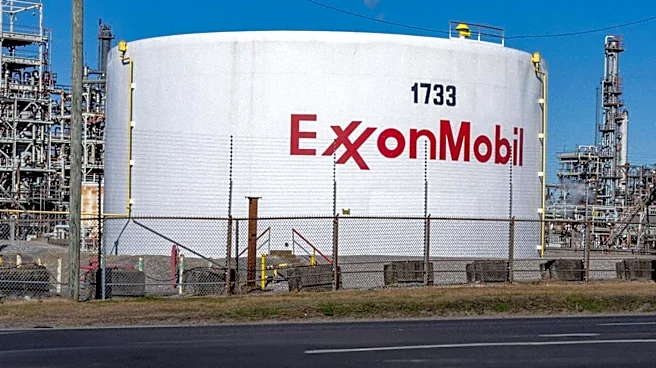
ExxonMobil Holdings Corporation, a major integrated energy company, is experiencing disruptions in its liquefied natural gas (LNG) operations from Qatar. Damage to Qatar's LNG facilities and ongoing shipping
constraints have limited the volume of gas ExxonMobil can sell from these operations. This situation contrasts with Equinor ASA, another large-cap energy player, which is well-positioned to benefit from high European gas prices by supplying gas from Norway. Equinor's gas price exposure is 70% day-ahead and 30% month-ahead, allowing it to quickly capitalize on market price increases. The European gas market is currently tight due to low storage levels, restricted LNG shipments through the Strait of Hormuz, and continued Asian LNG demand. While ExxonMobil also benefits from higher gas prices, these specific disruptions in Qatar are impacting its ability to fully leverage the market conditions.
Why It's Important?
The operational challenges faced by ExxonMobil in Qatar highlight the vulnerabilities in global energy supply chains and their impact on major U.S. energy companies. Disruptions in key production regions can significantly affect a company's revenue streams and market competitiveness, even amidst favorable market conditions like high gas prices. For ExxonMobil, these limitations mean a reduced capacity to meet demand and potentially lower profits compared to competitors like Equinor, which has more stable supply routes. This situation underscores the strategic importance of diversified energy sources and resilient supply chains for U.S. energy giants. Investors in ExxonMobil may see a slower pace of growth or lower returns compared to companies with fewer logistical hurdles, impacting their portfolio performance and investment decisions in the energy sector.
What's Next?
ExxonMobil will likely focus on mitigating the impact of the damaged Qatari LNG facilities and addressing shipping constraints to restore full operational capacity. This could involve significant investment in repairs, rerouting shipments, or exploring alternative supply arrangements to compensate for the reduced volumes from Qatar. The company will also need to navigate the evolving dynamics of the global gas market, particularly in Europe and Asia, where demand remains strong. Investors will be closely watching for updates on the repair timelines and any strategic adjustments ExxonMobil makes to maintain its market position and dividend growth. The ongoing competition with companies like Equinor, which are currently benefiting from more stable supply lines, will also influence ExxonMobil's future strategies and market performance.
Beyond the Headlines
The challenges faced by ExxonMobil in Qatar underscore broader geopolitical and logistical risks inherent in the global energy sector. Damage to critical infrastructure, whether from accidents or other events, can have far-reaching consequences for energy security and international trade. This situation also highlights the increasing importance of regional energy hubs, such as Norway for European gas supply, in providing stability amidst global disruptions. For U.S. energy policy, it emphasizes the need for robust diplomatic efforts to secure energy interests and diversify supply sources to reduce reliance on potentially volatile regions. The incident could also prompt a re-evaluation of risk management strategies within major energy corporations, leading to greater emphasis on operational resilience and geographical diversification of assets to safeguard against similar future disruptions.